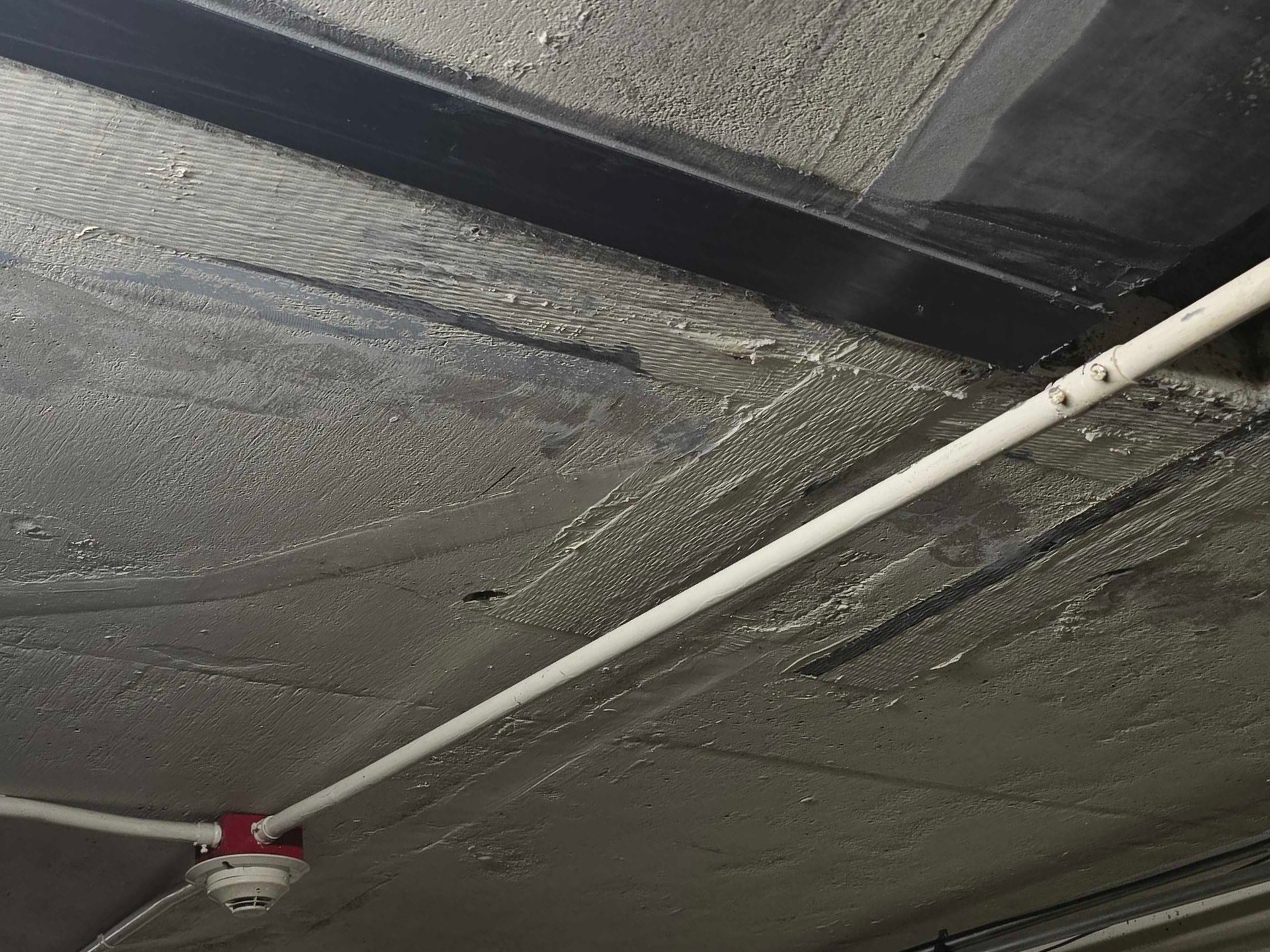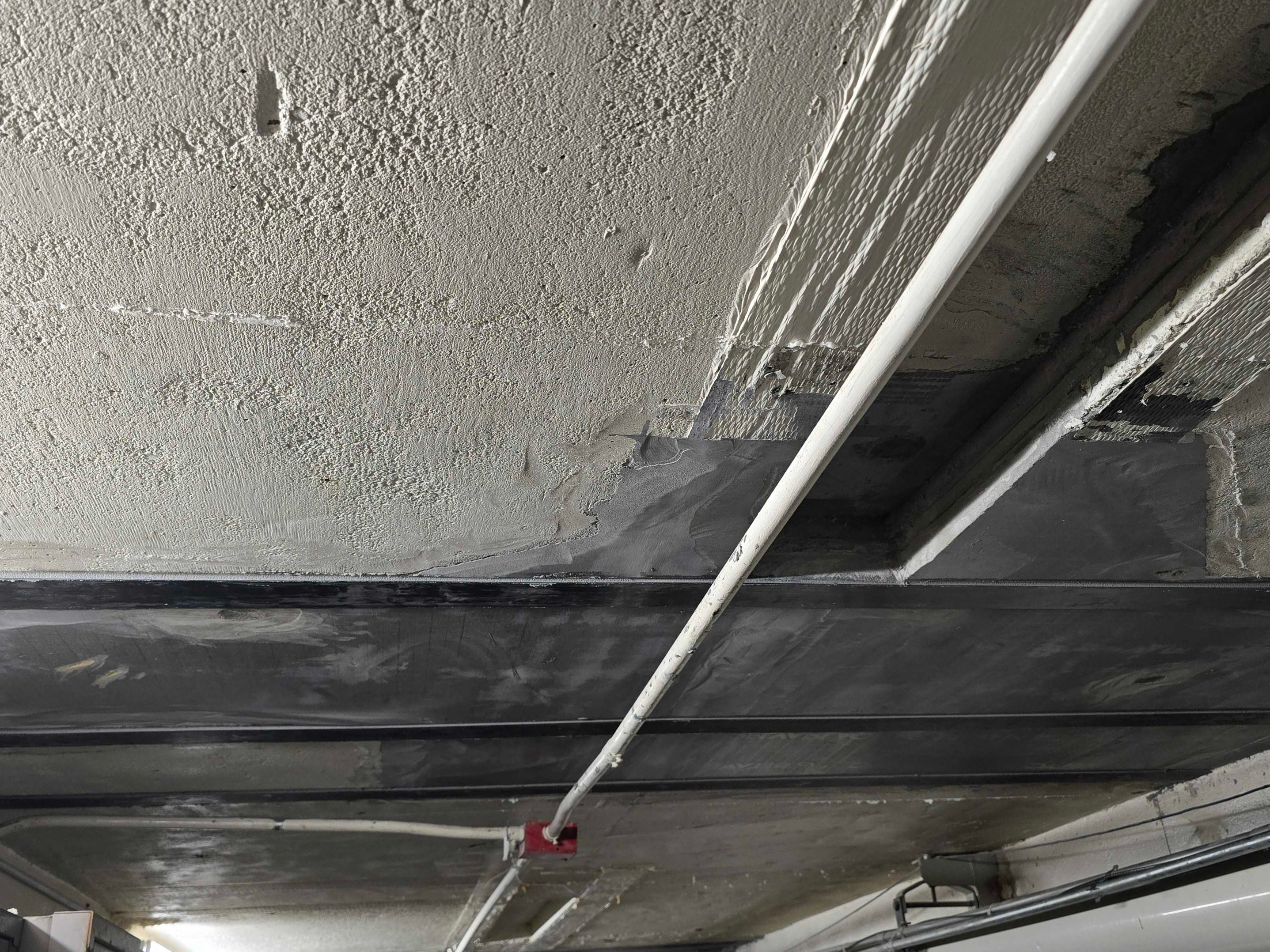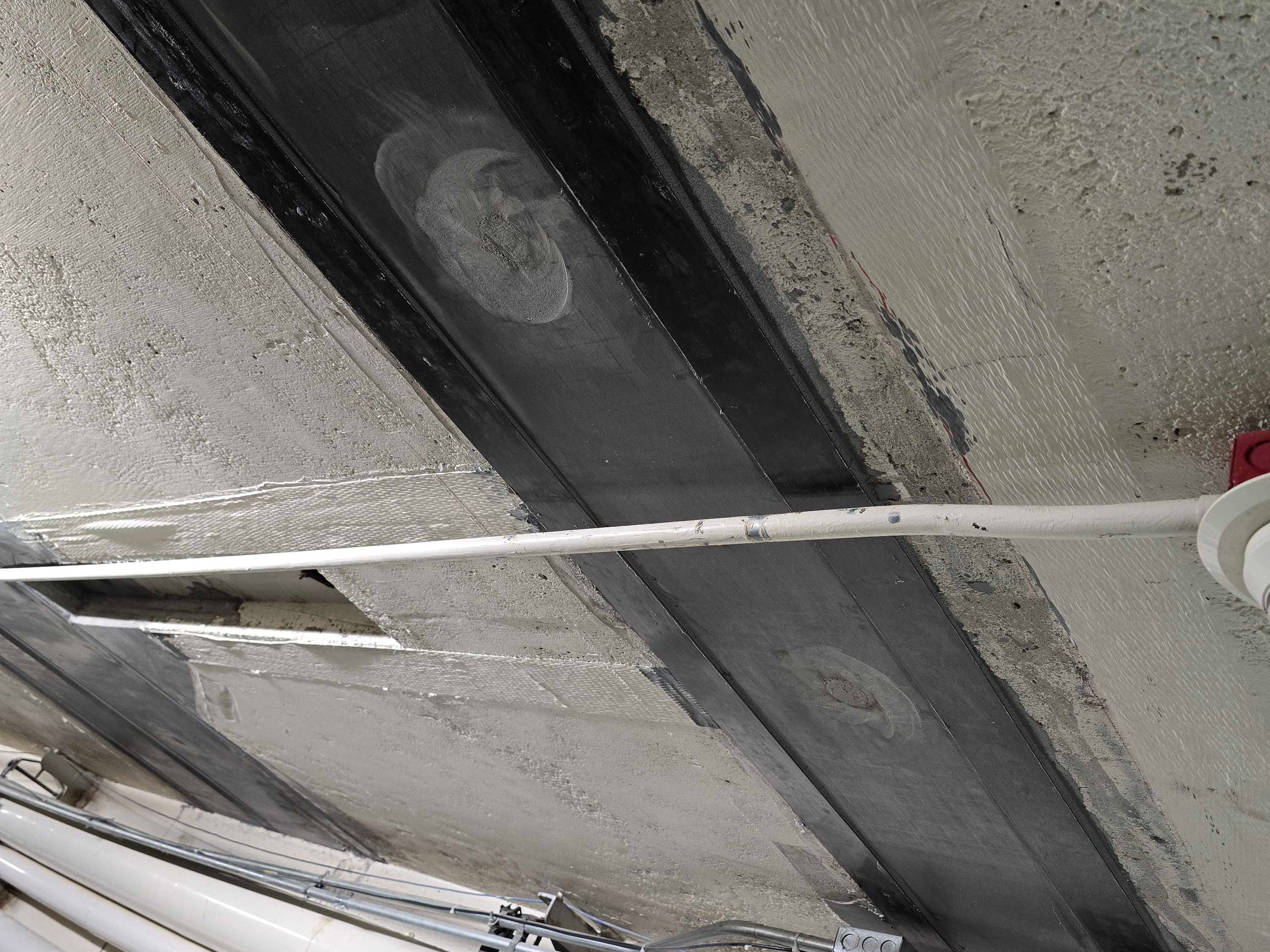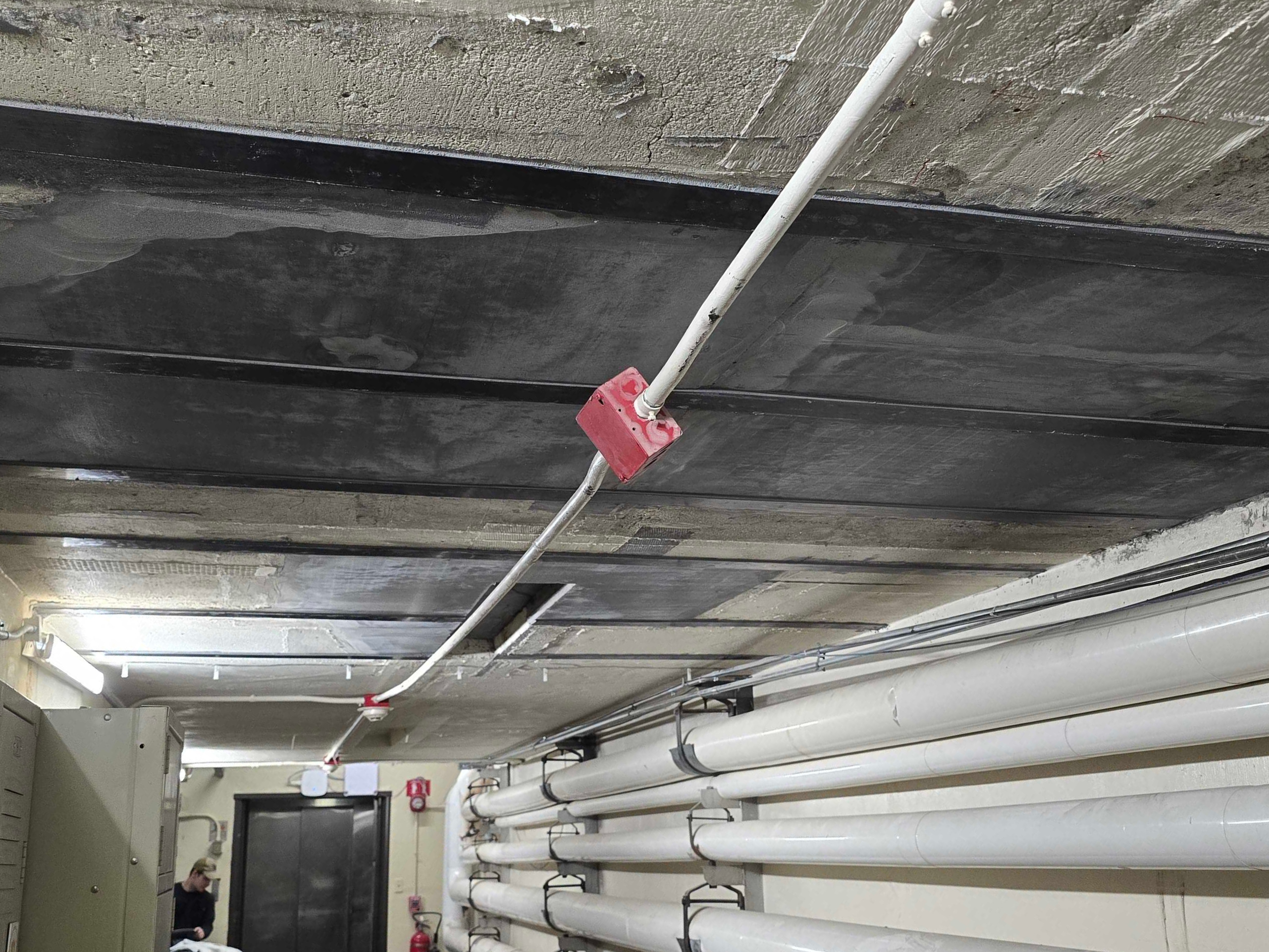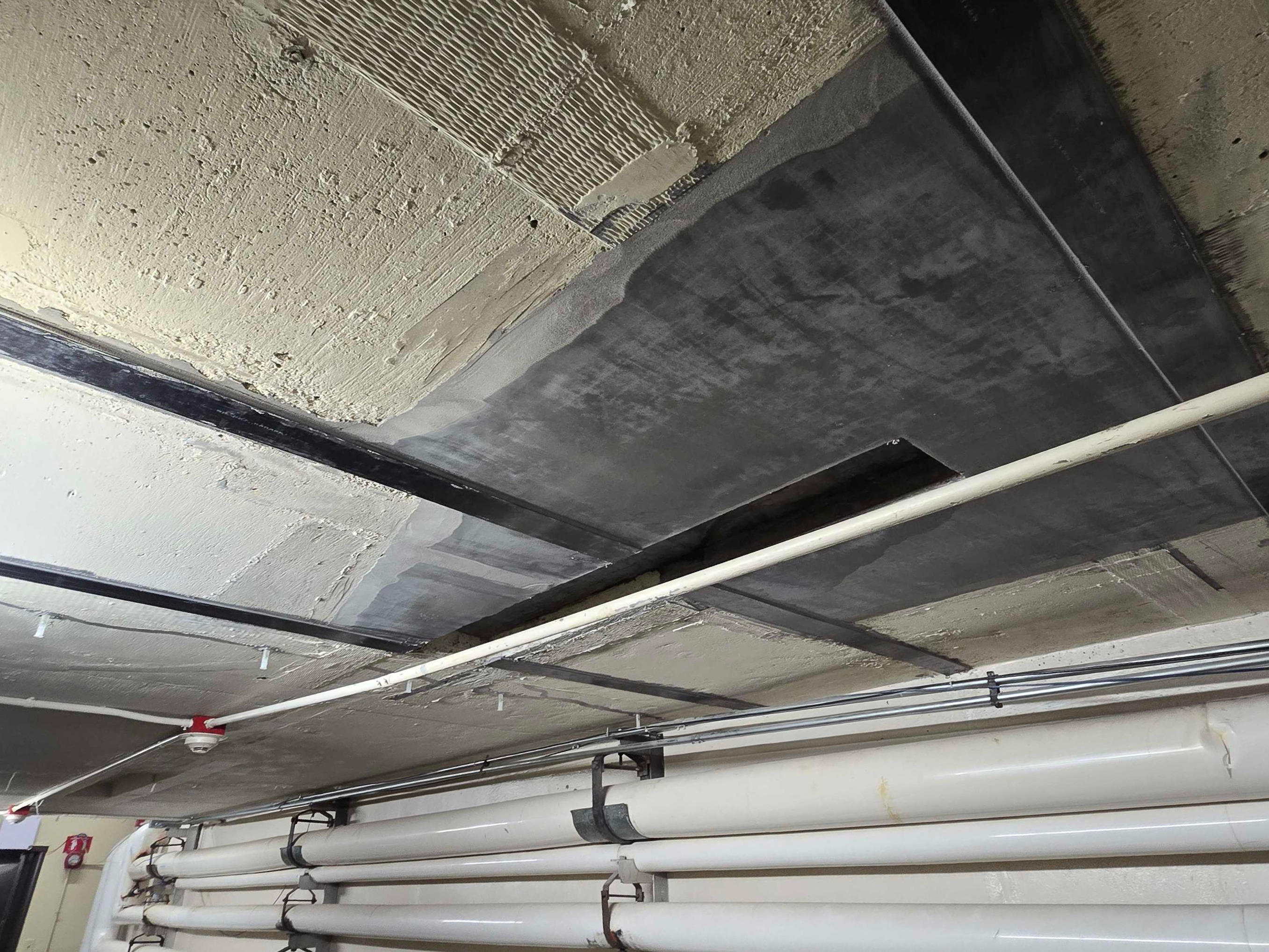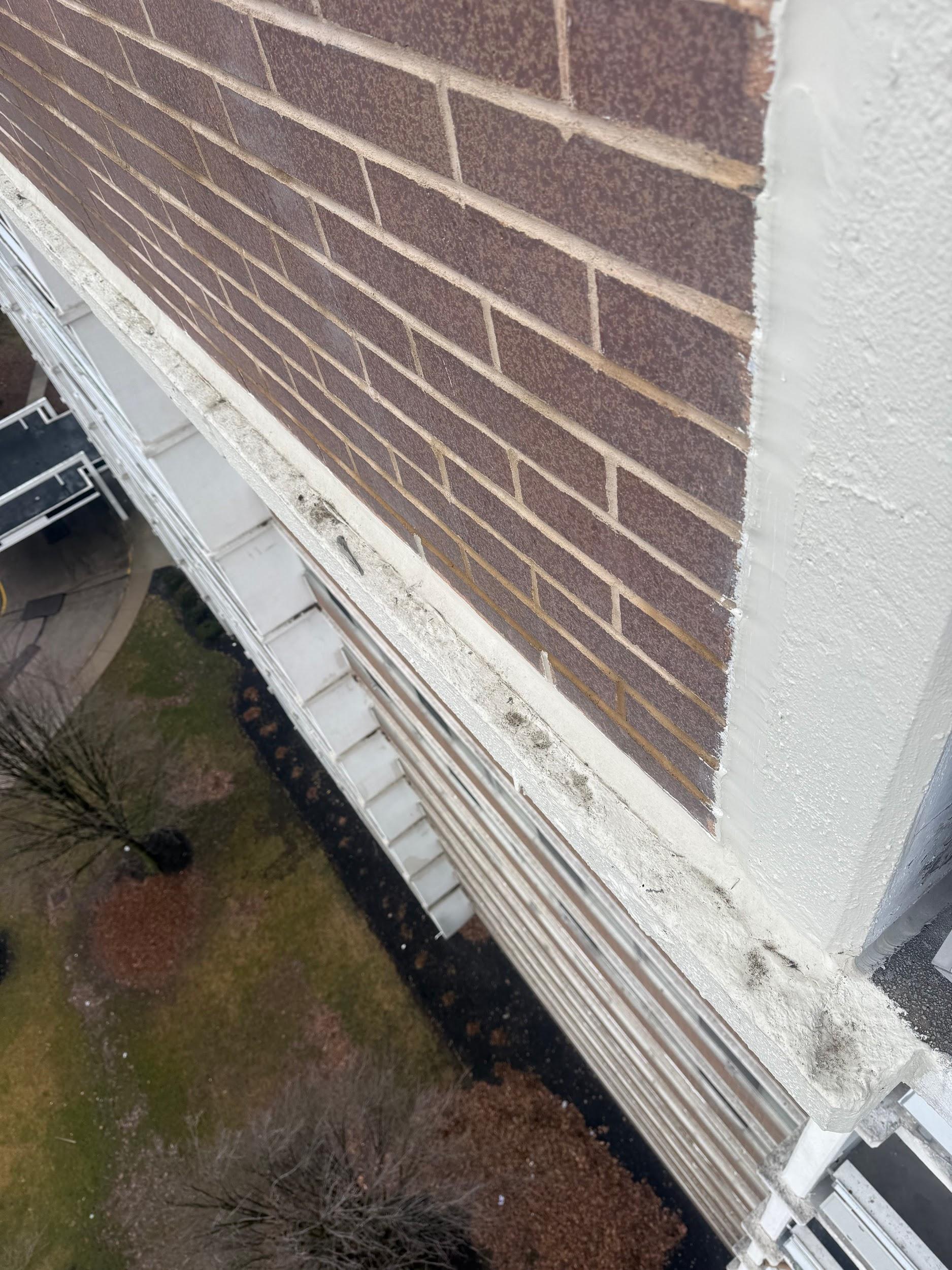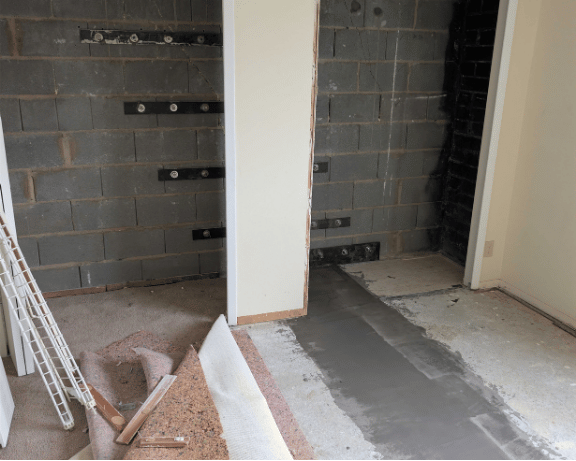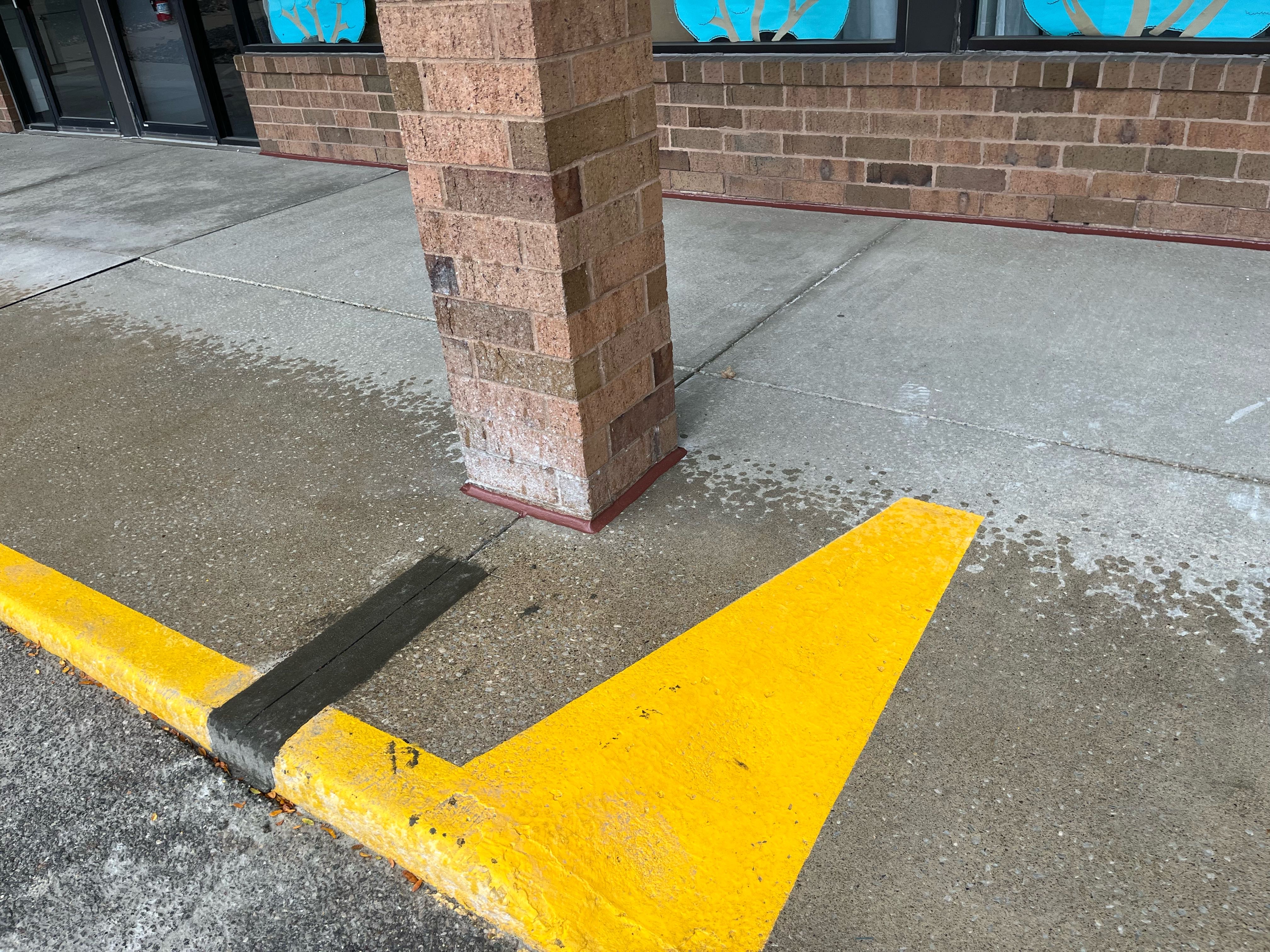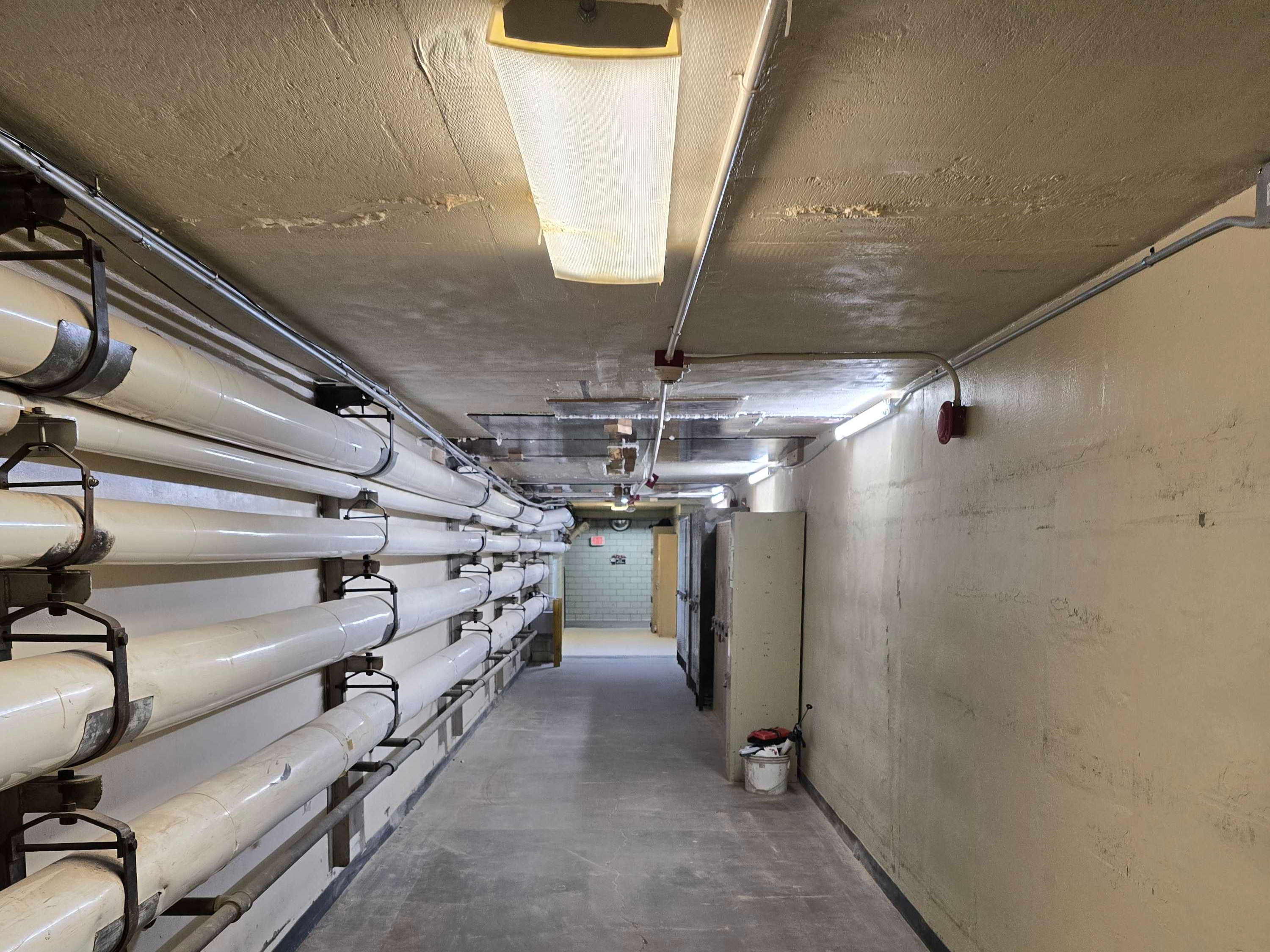
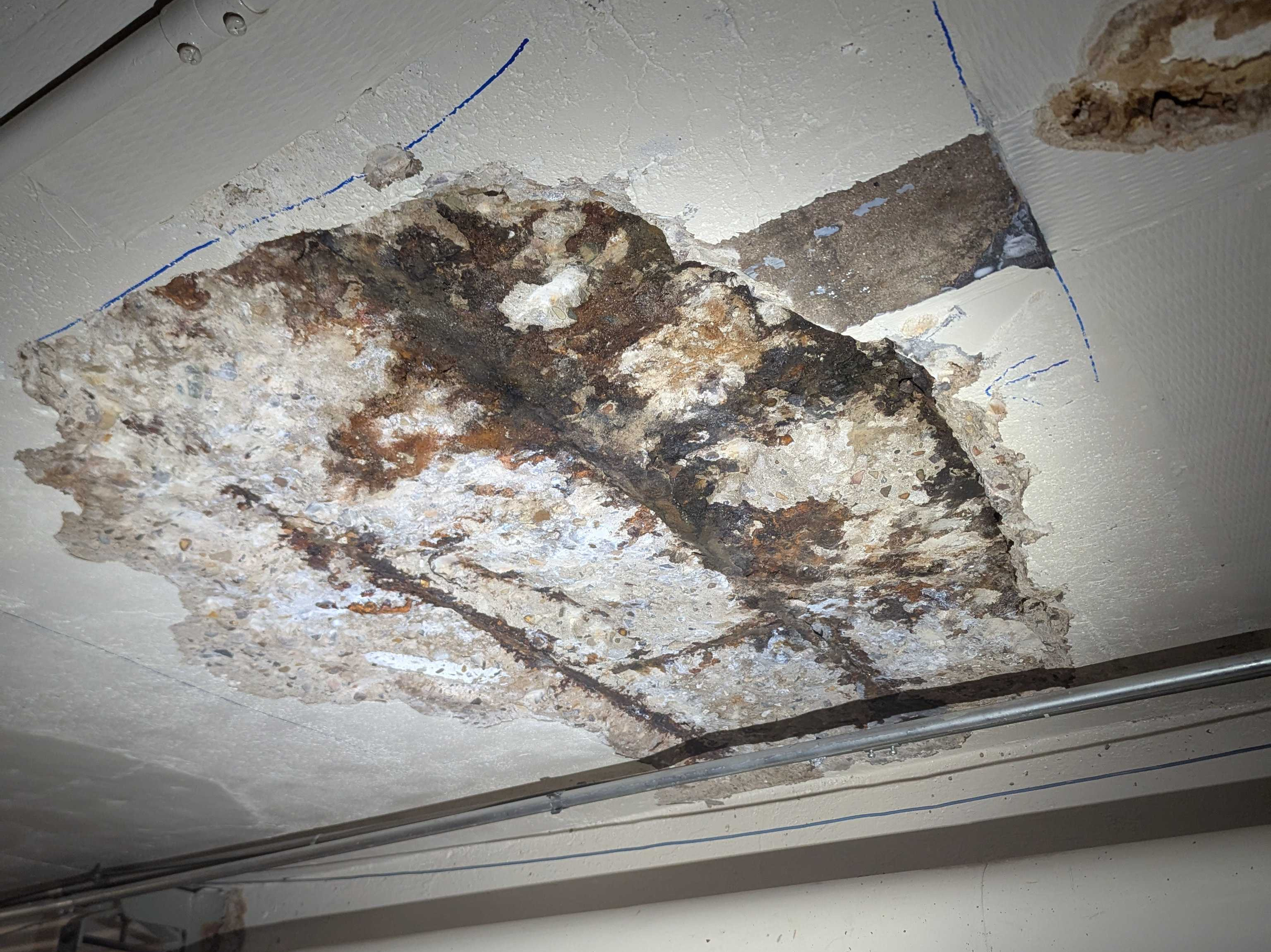
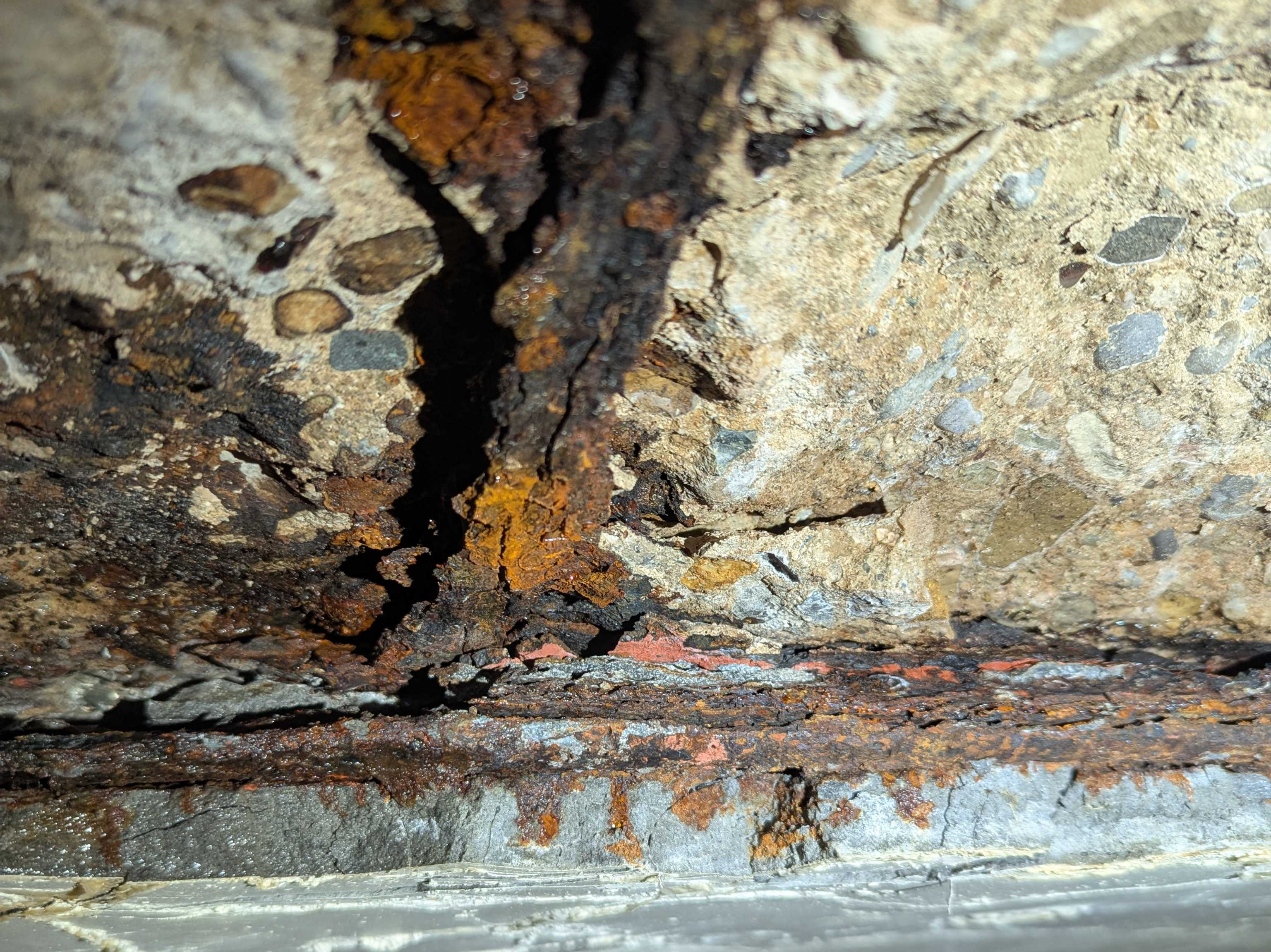
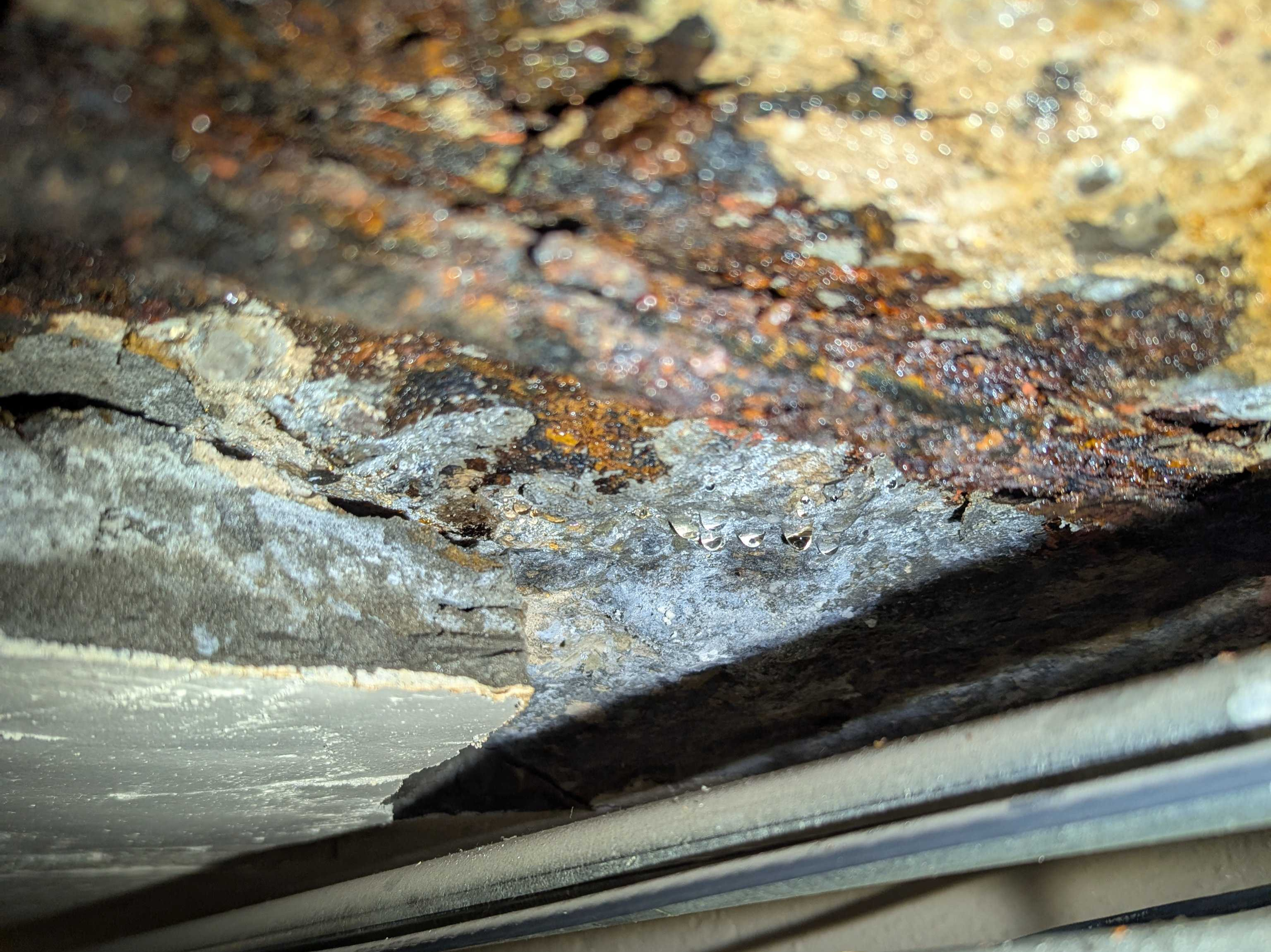
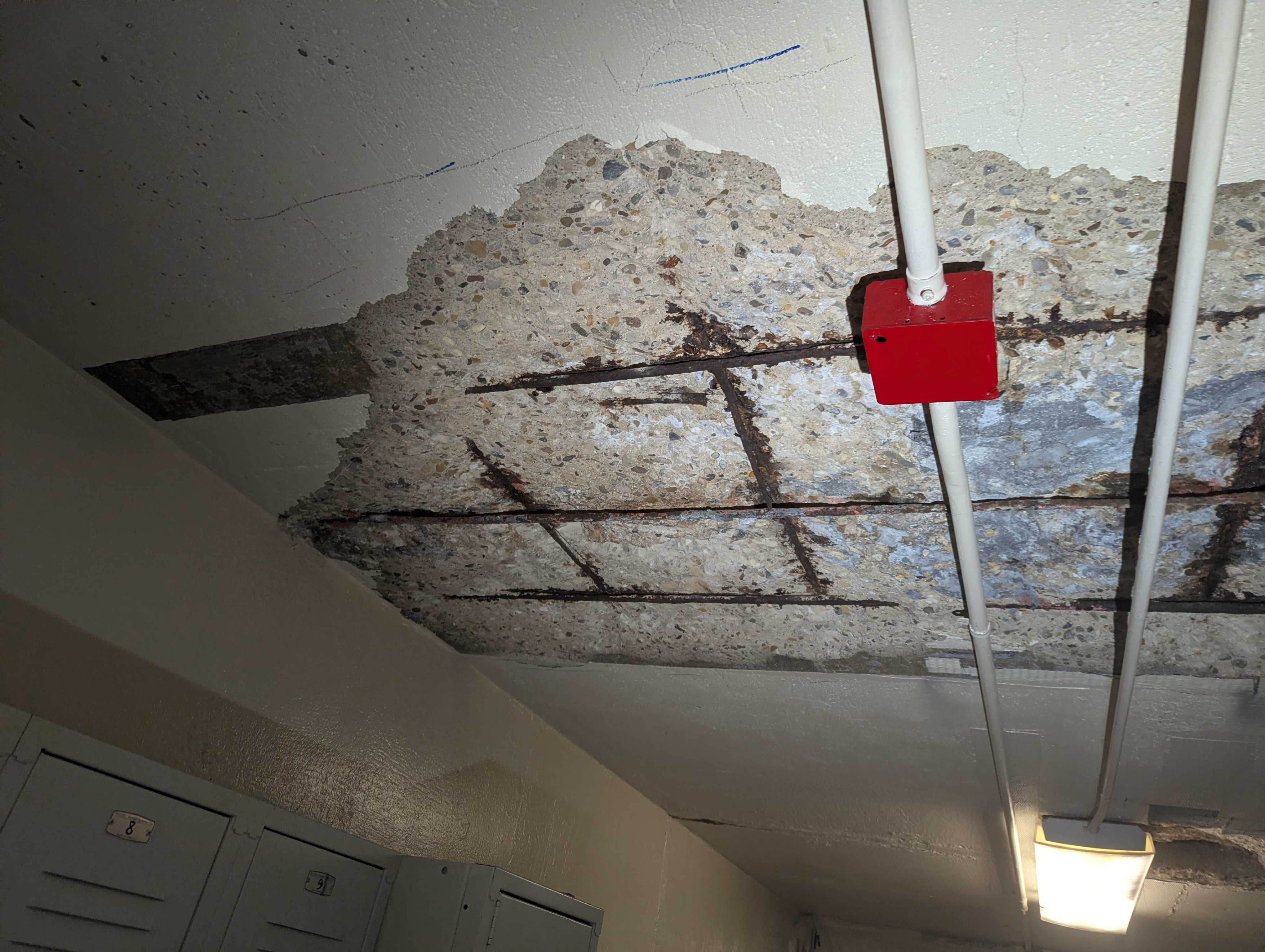
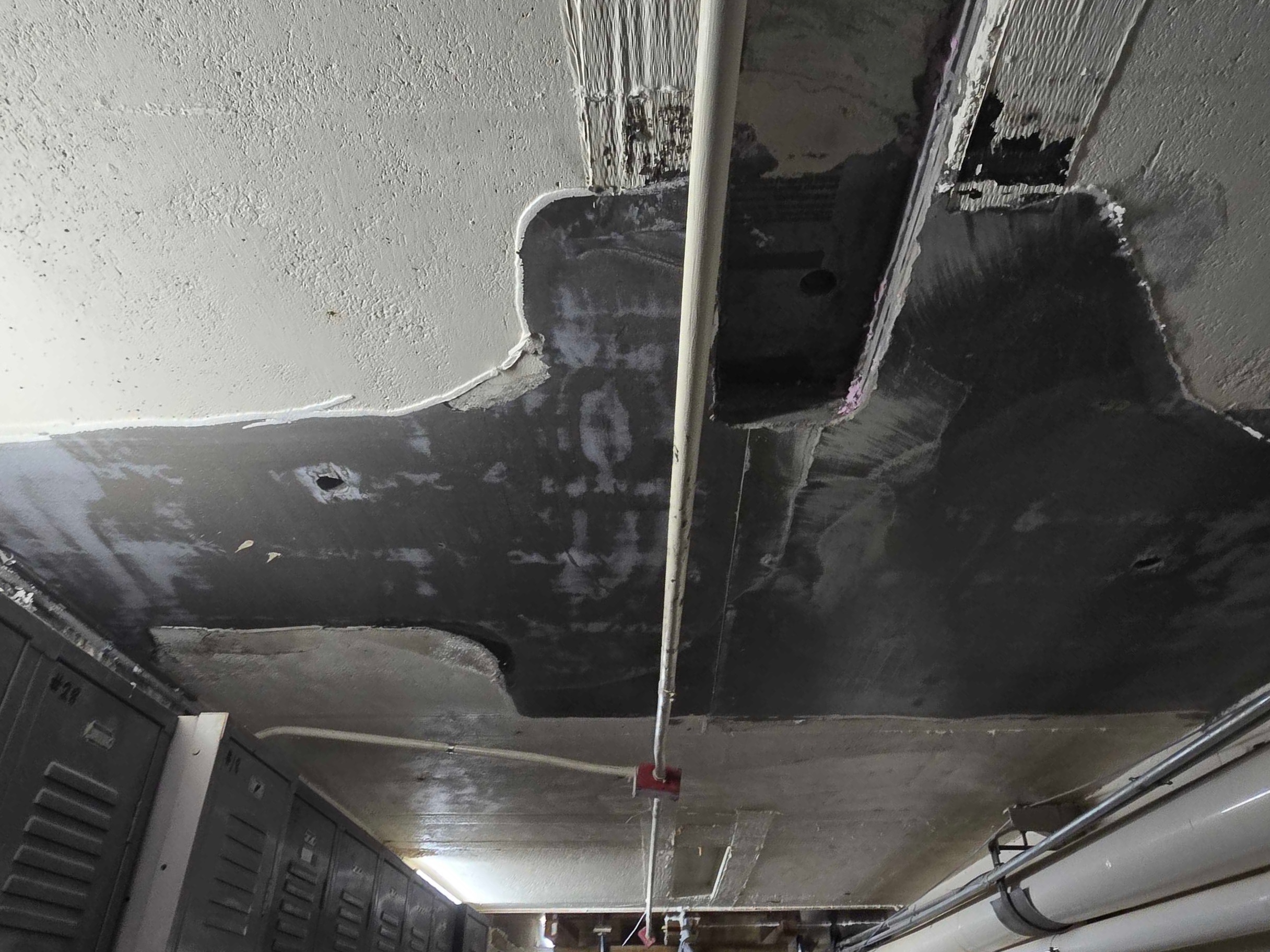
The hospital's utility tunnel had failing overhead concrete - patches up to 4 to 5 inches deep with heavily corroded rebar - directly above a corridor the hospital could not shut down. The repairs were governed by an engineer's drawings and specifications: cast-in-place concrete patching, carbon fiber reinforcement at designated locations, and pressure epoxy injection of cracks.
The setting was the hard part. Work in an operating hospital meant contractor badging and safety training, dust containment with HEPA-filtered negative air, a ceiling crowded with live conduit, fire alarm devices, and insulated piping - and a corridor that had to be cleaned, mopped, and reopened to foot traffic at the end of every working day.
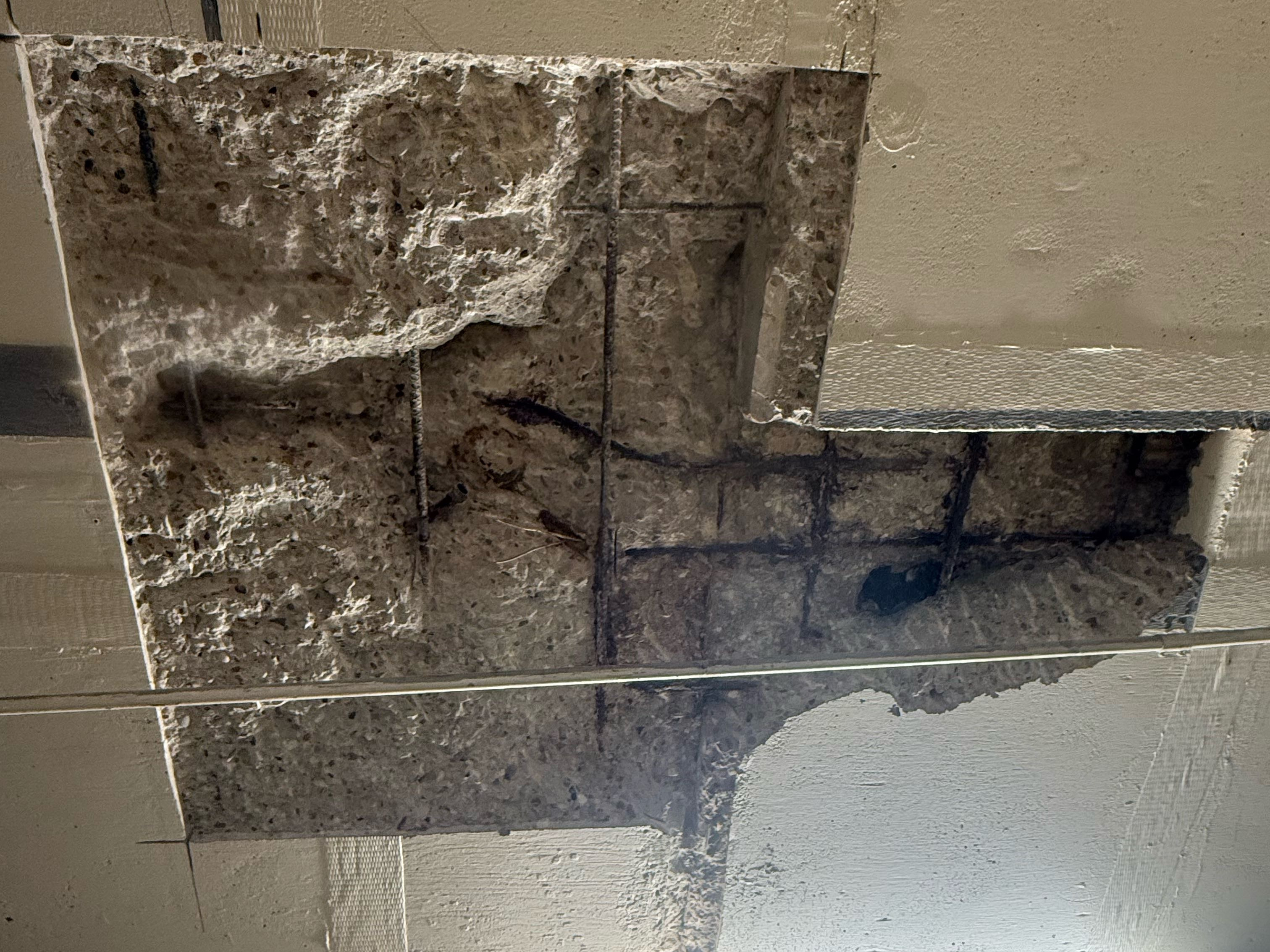
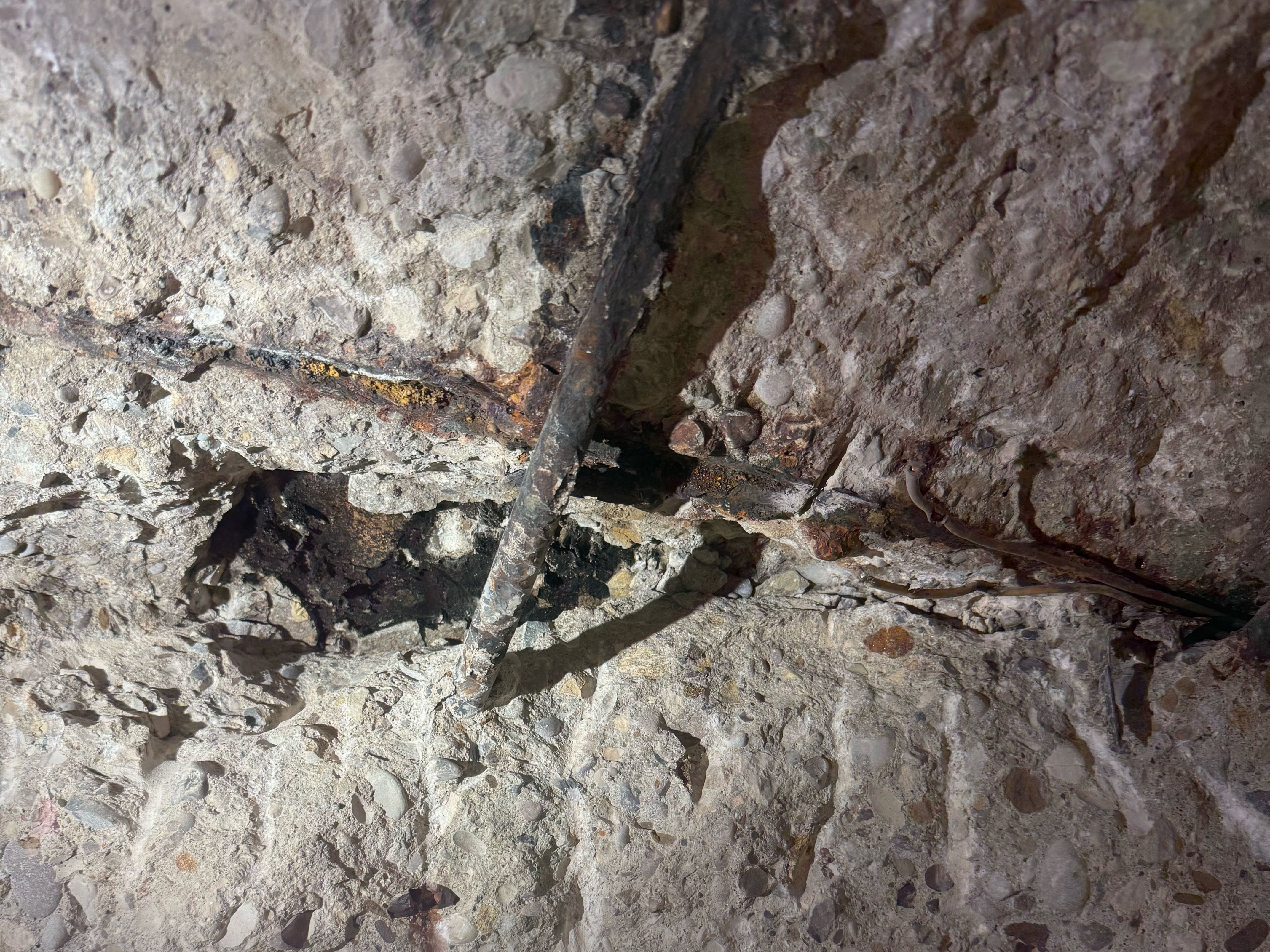
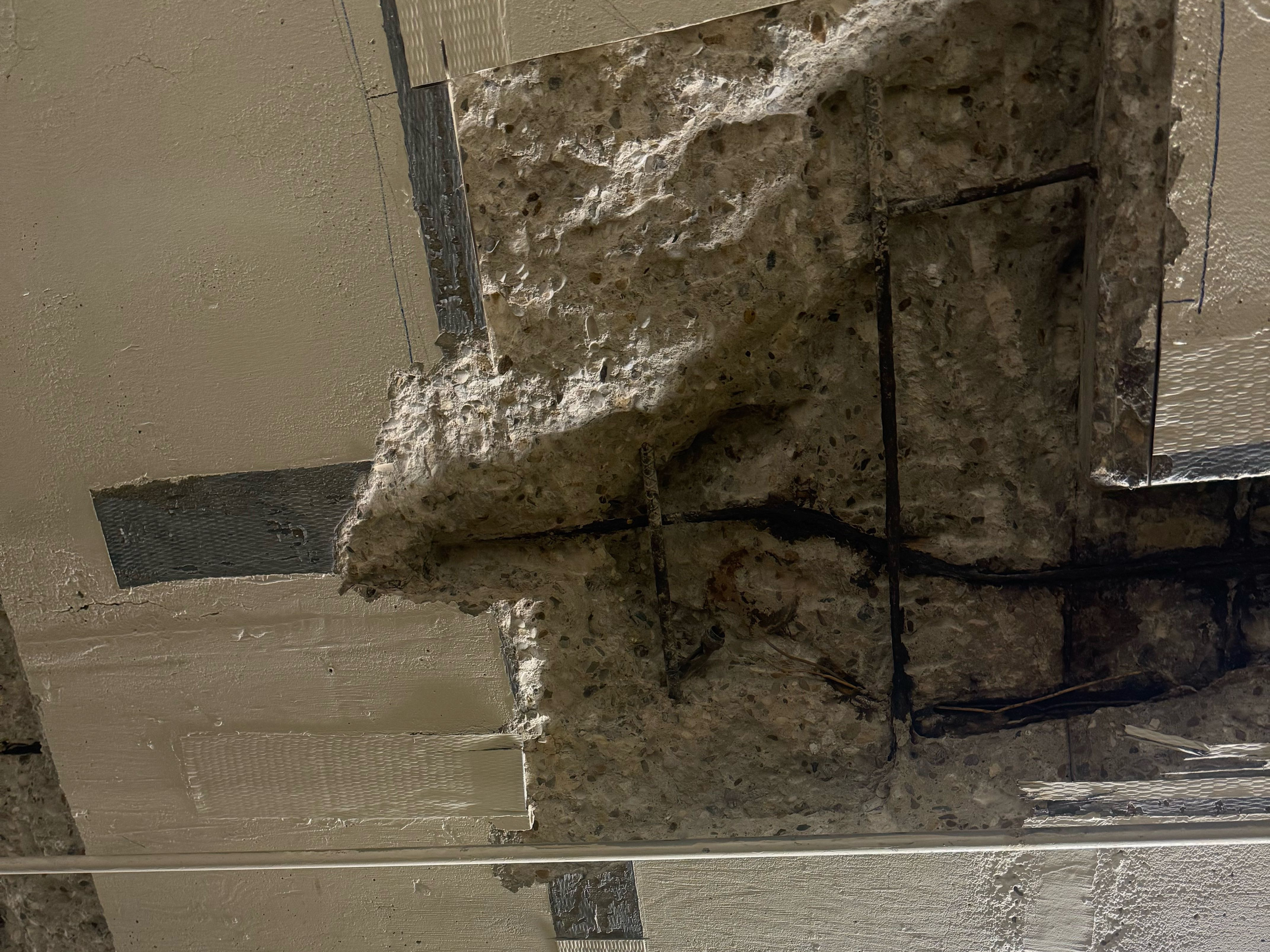
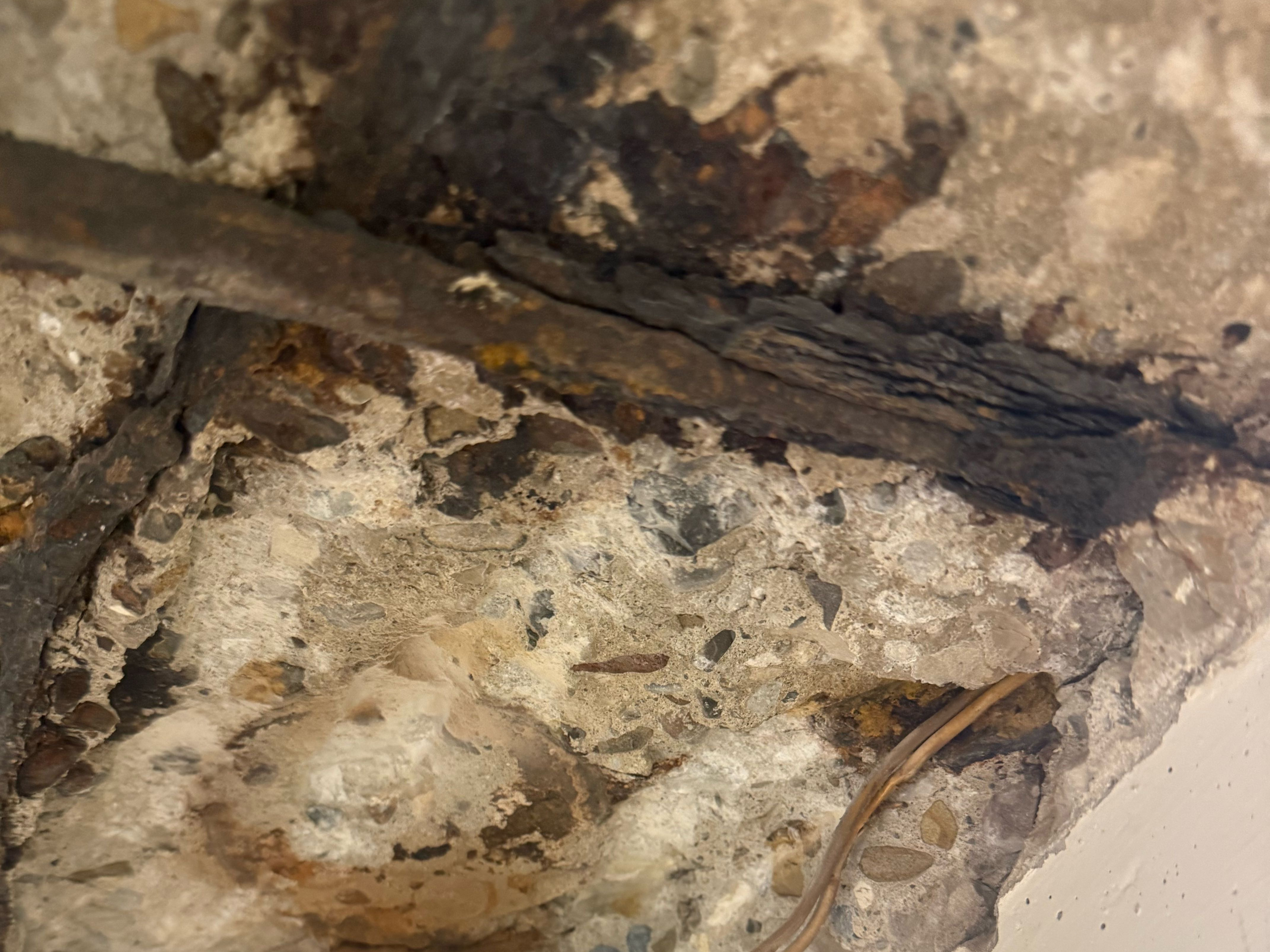
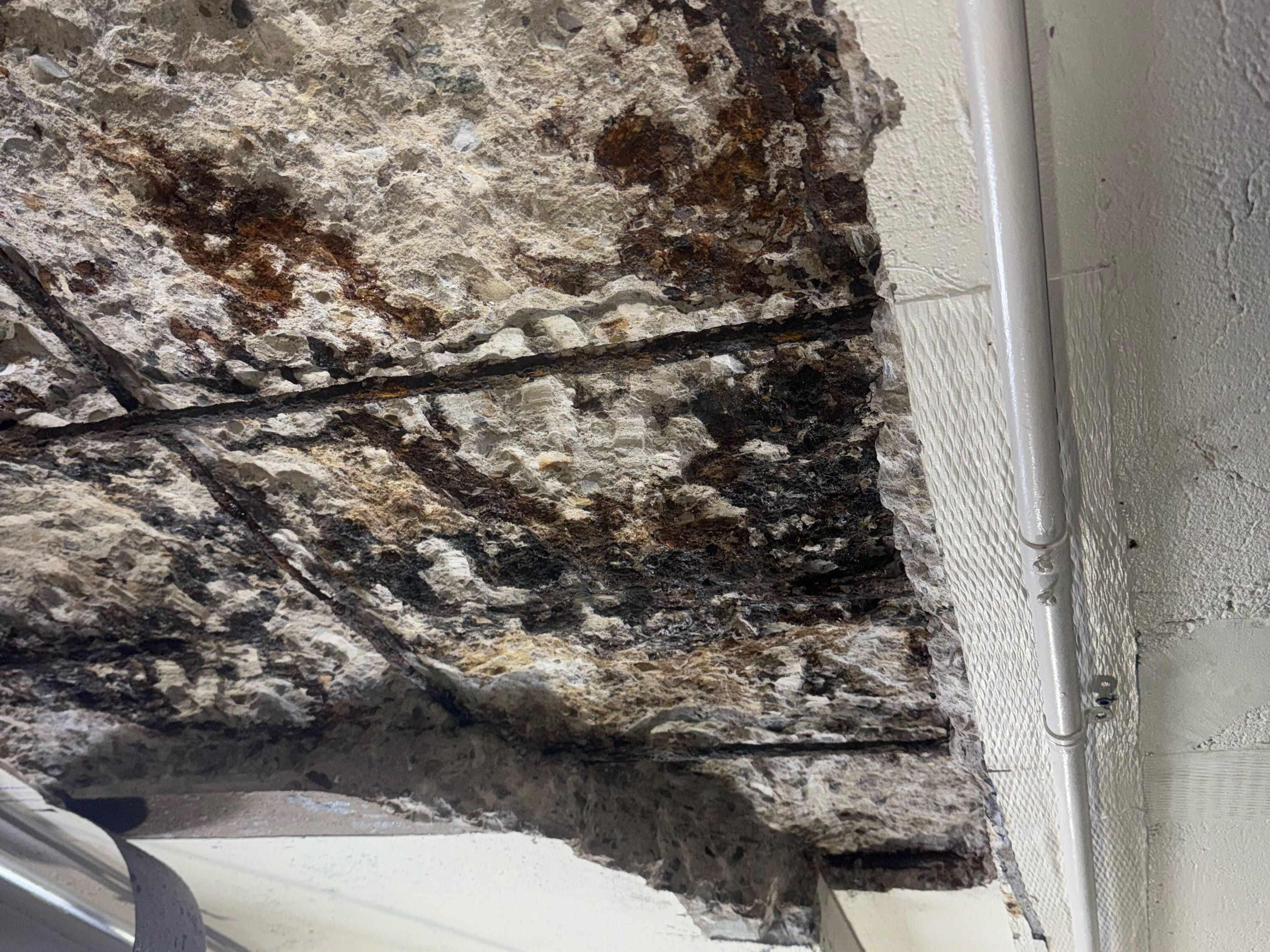
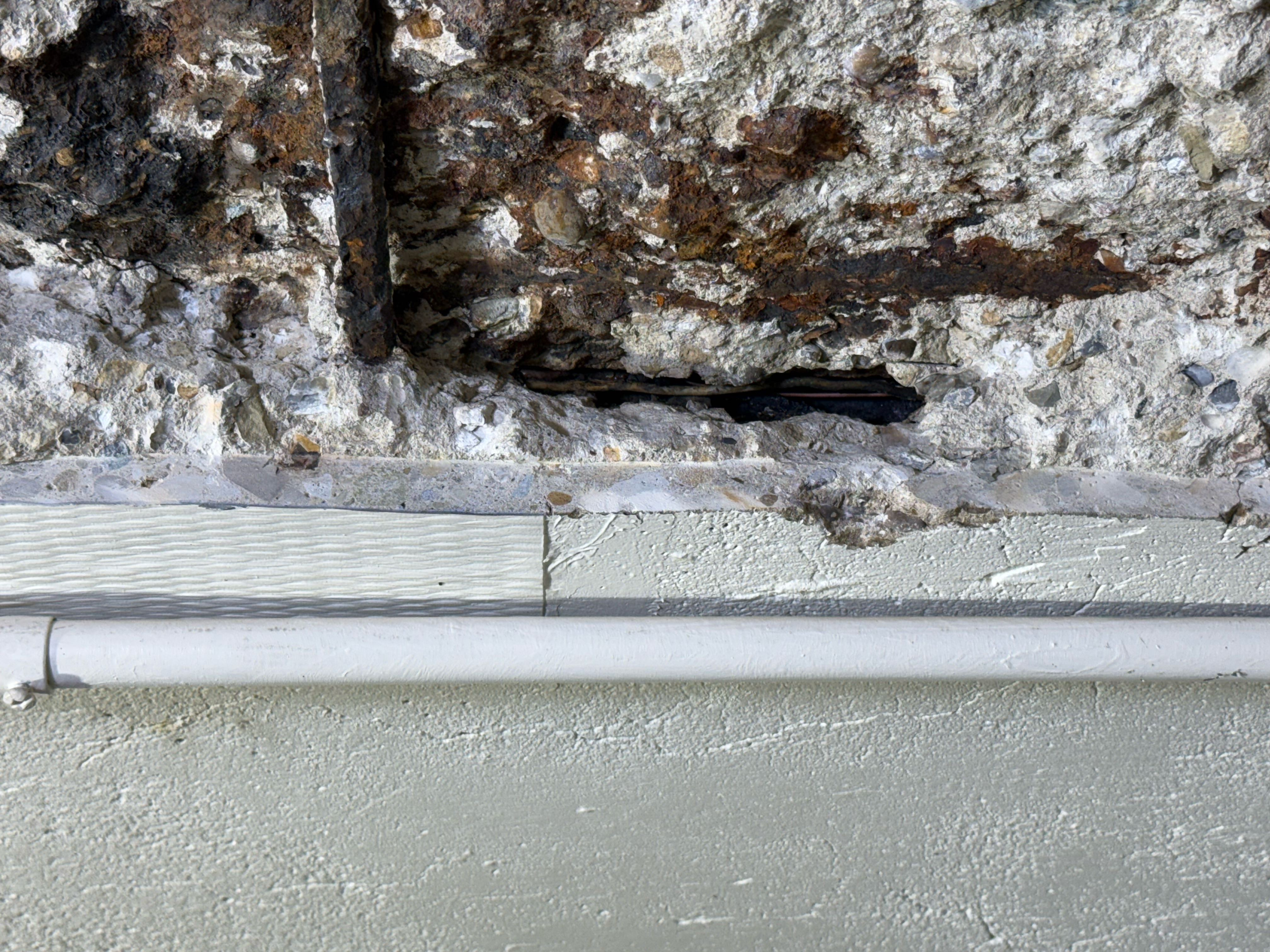
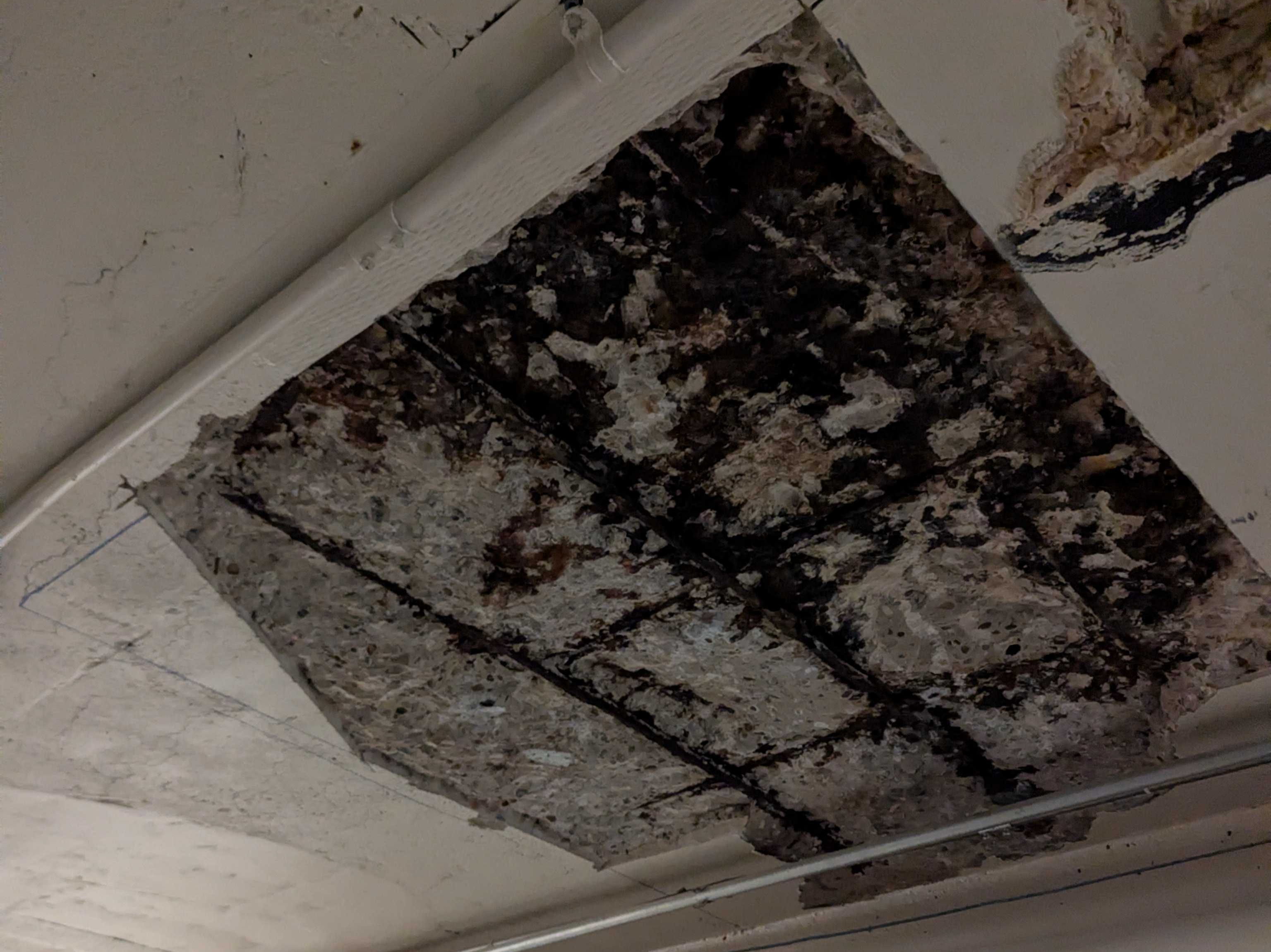
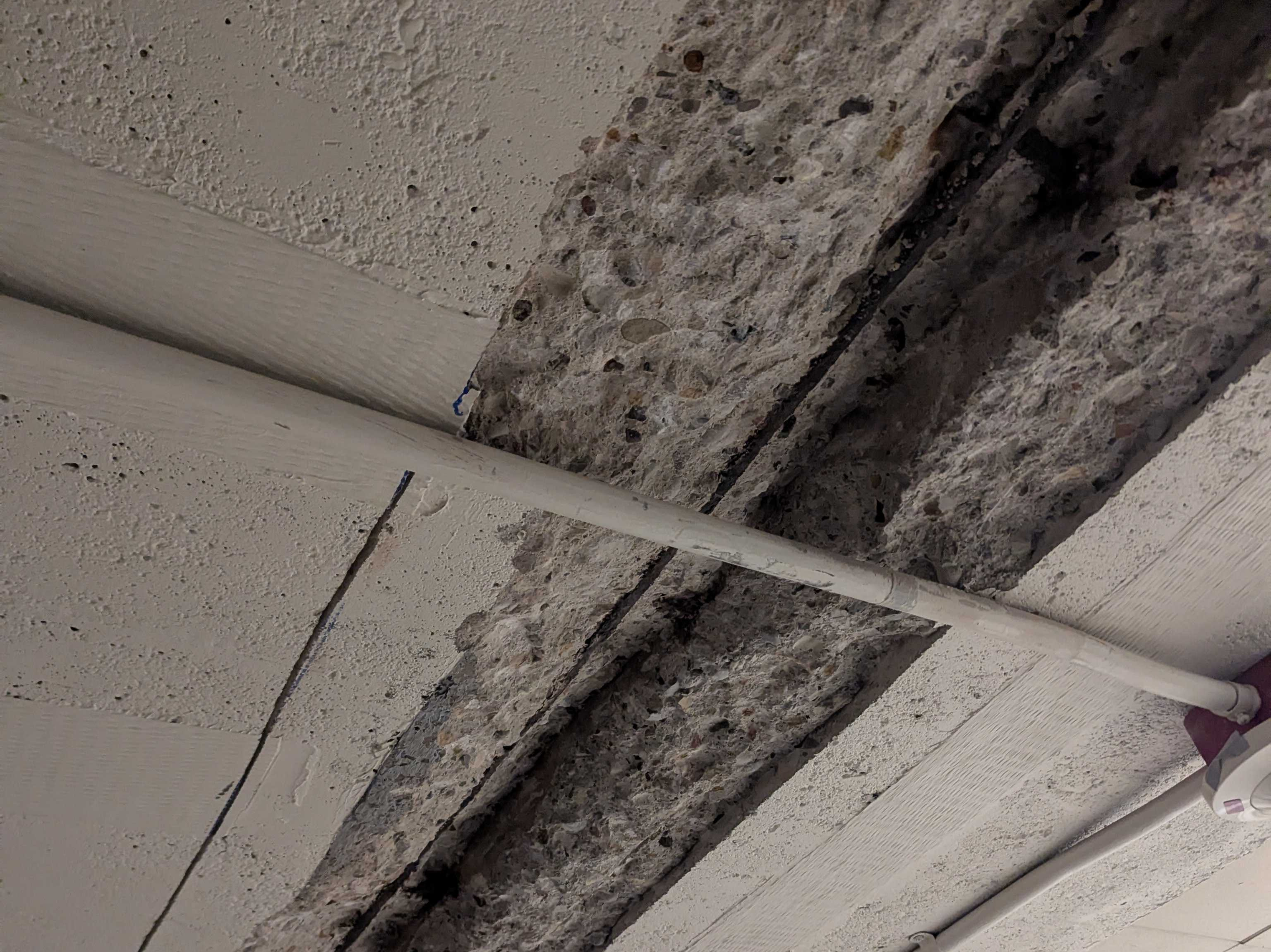
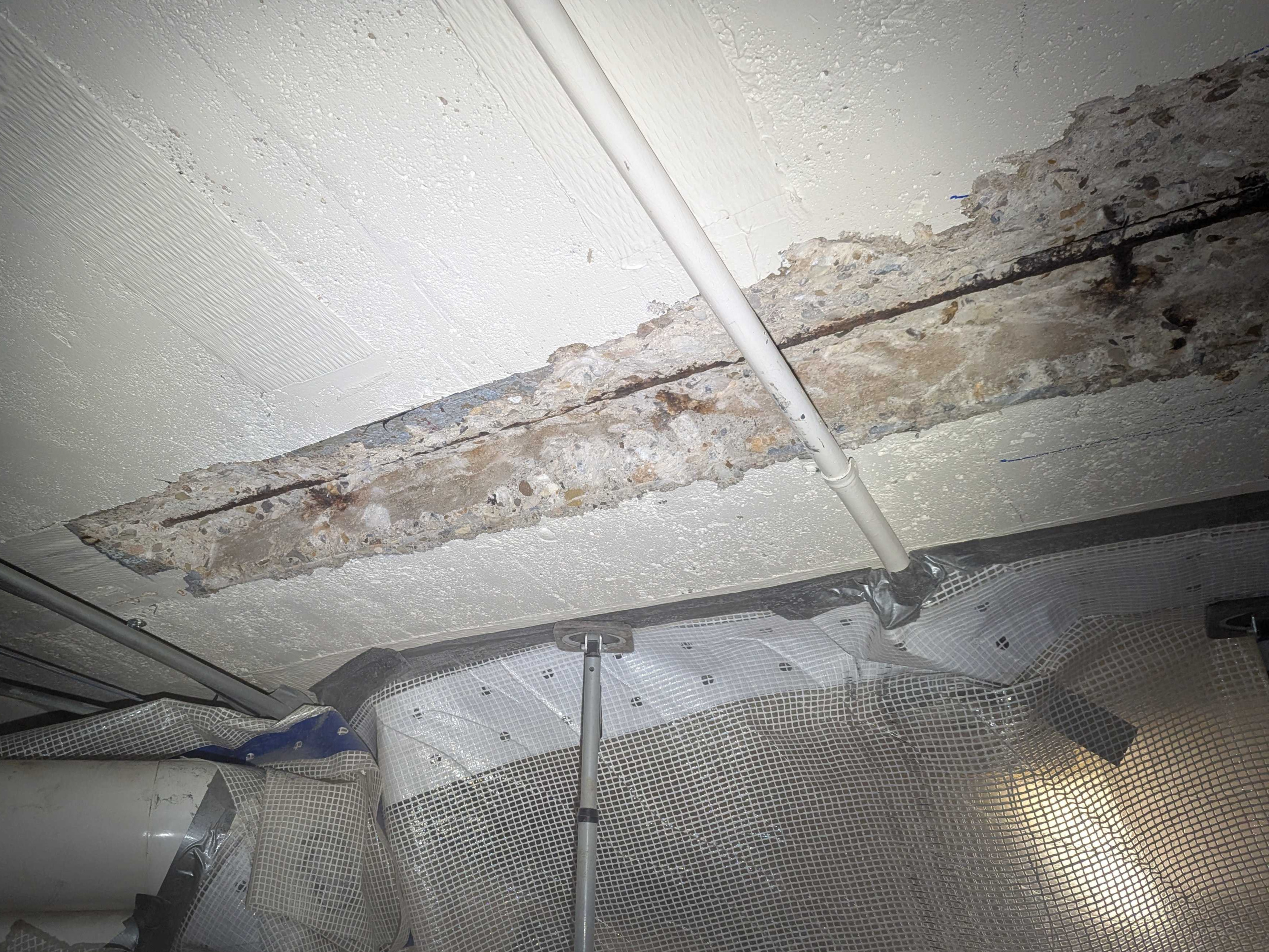
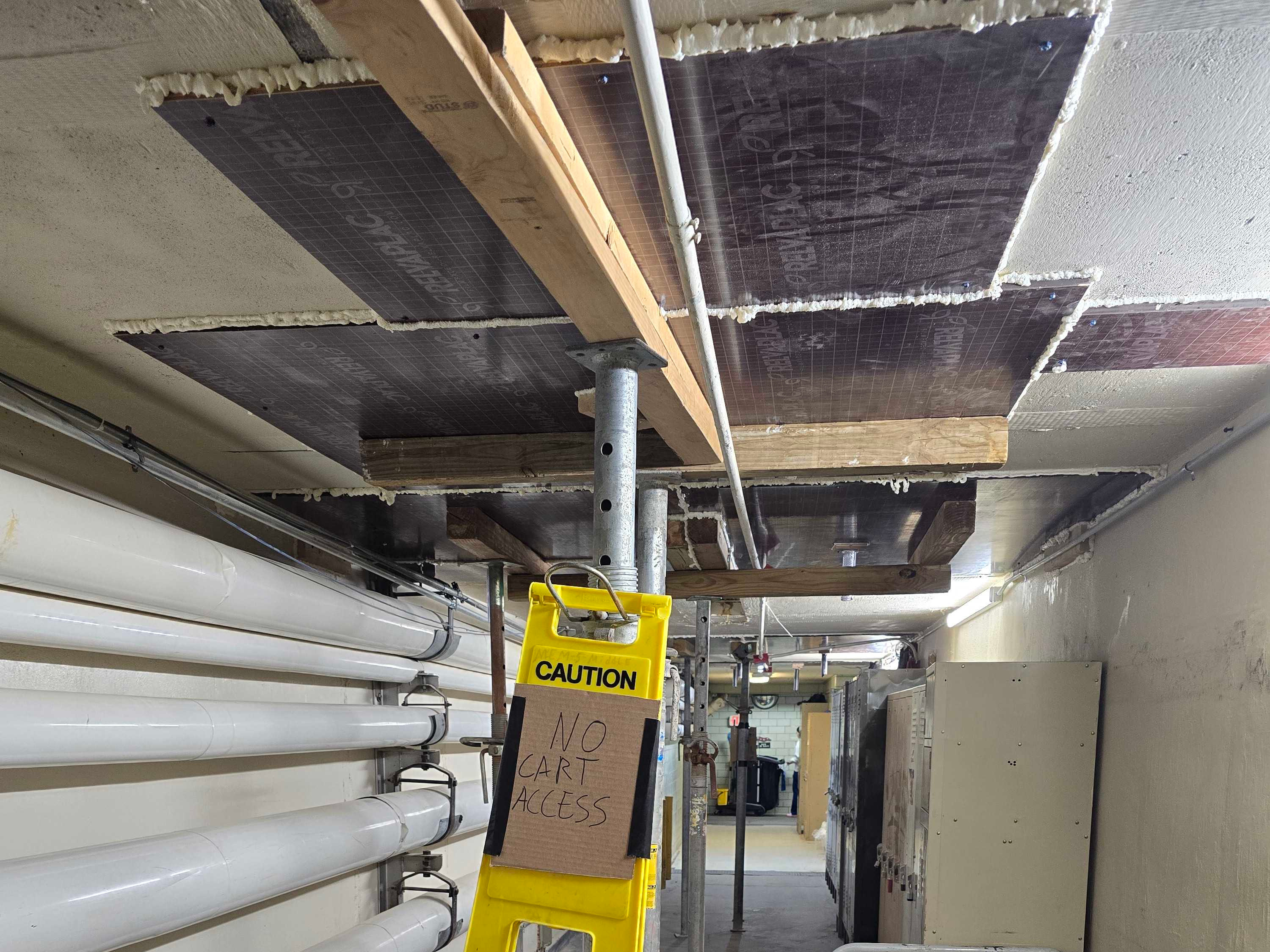
Plastic containment walls went up each shift, with air scrubbers ducted to achieve true negative air. Each day ended with debris removed and the corridor mopped and reopened - the tunnel never stopped serving the hospital.
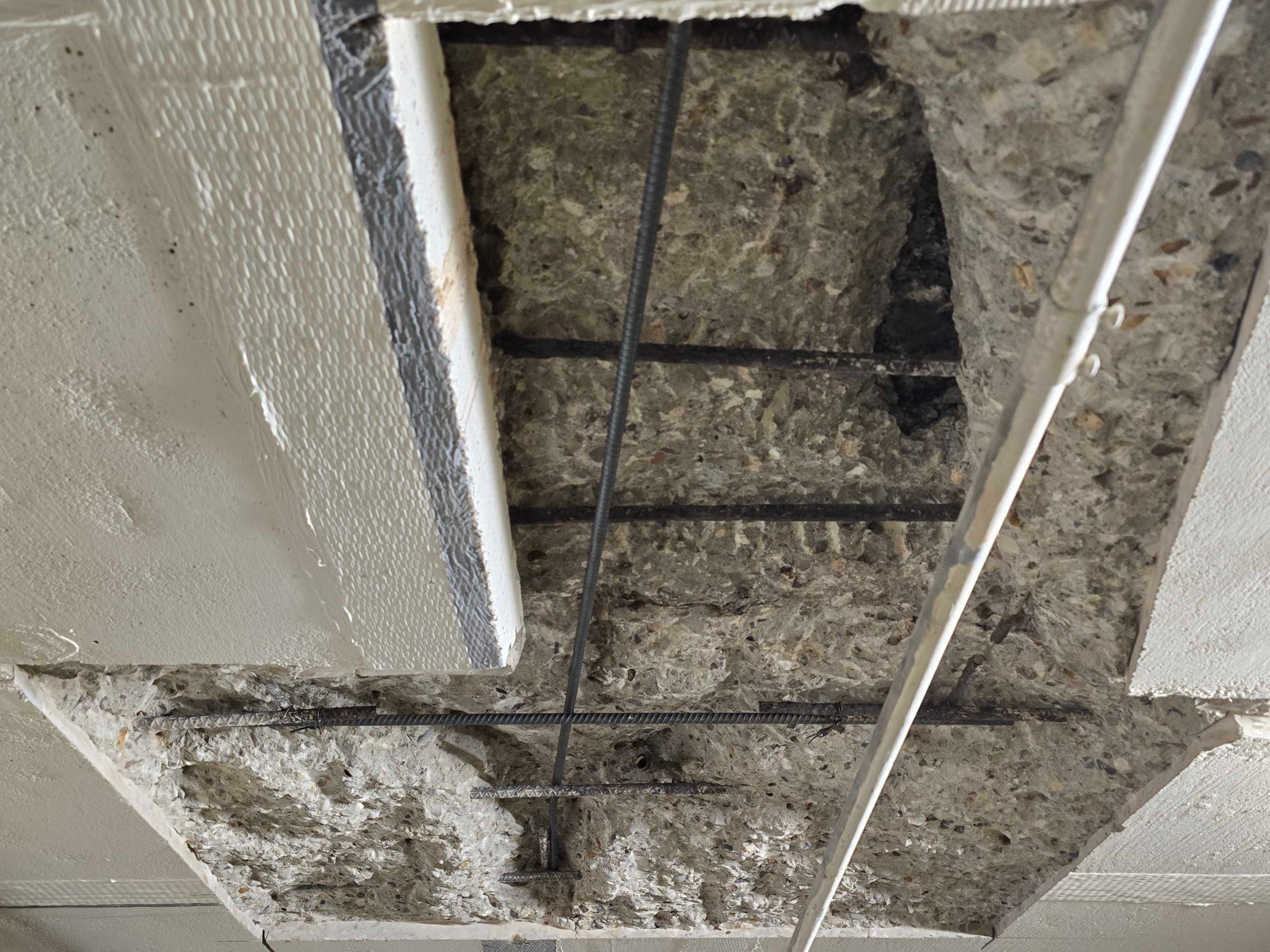
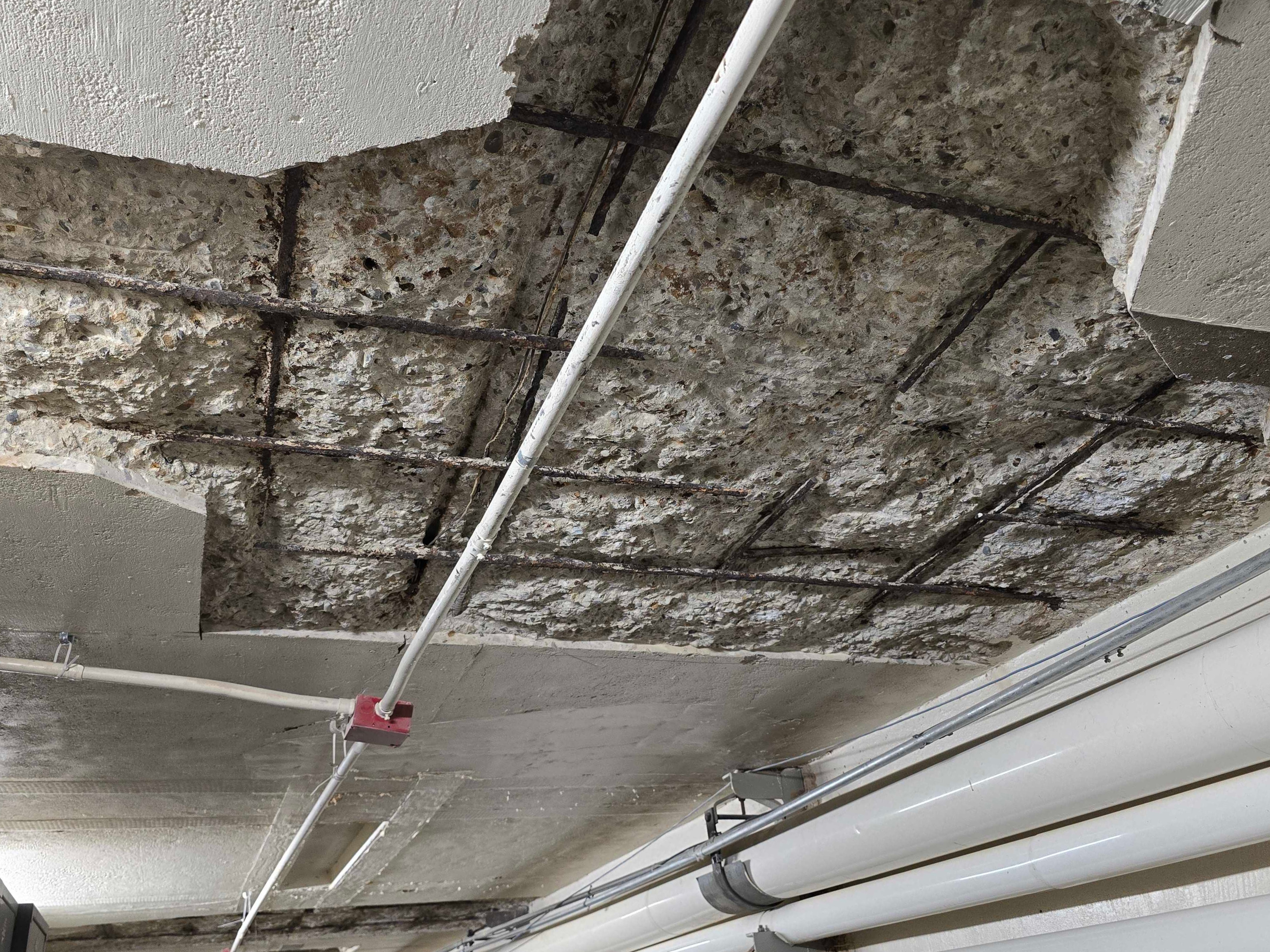
Deteriorated concrete was chipped out overhead to sound material, patch perimeters were cut with a clean mechanical edge, and chipping continued until clean steel was exposed. New rebar was doweled and tied into every patch.
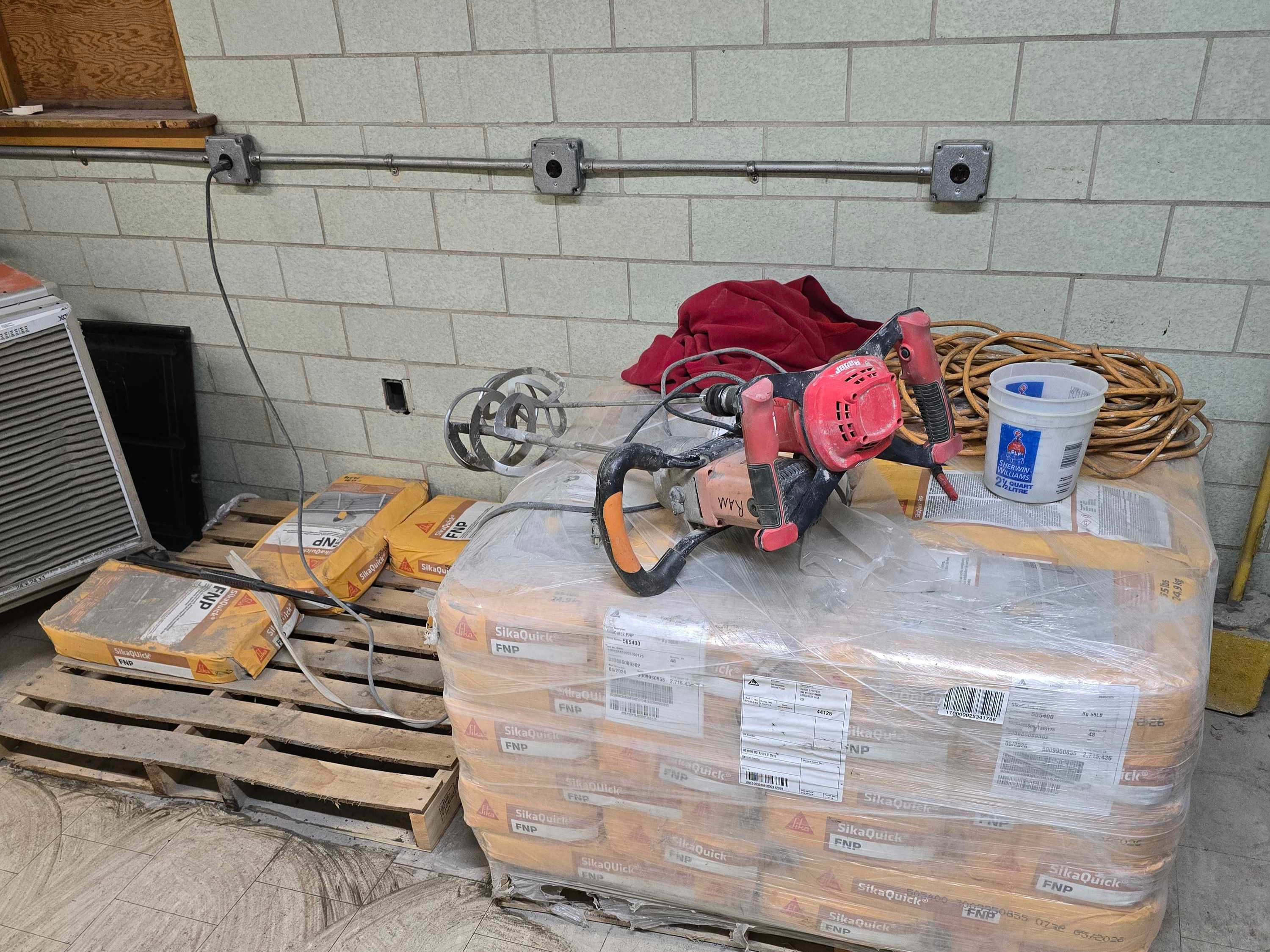
Forms were fitted and sealed around live conduit and piping, post-shored, and structural repair mortar was pumped overhead through ports - with a second pump brought in to keep the pour moving.
Cracks were pressure-injected with high-modulus epoxy and carbon fiber strips were bonded at the engineer's specified locations, then all ports were removed and ground flush.
When demolition revealed more deterioration than the original scope covered, we reviewed the findings with the owner and their engineer, and the added repairs were authorized by written change order before work continued.
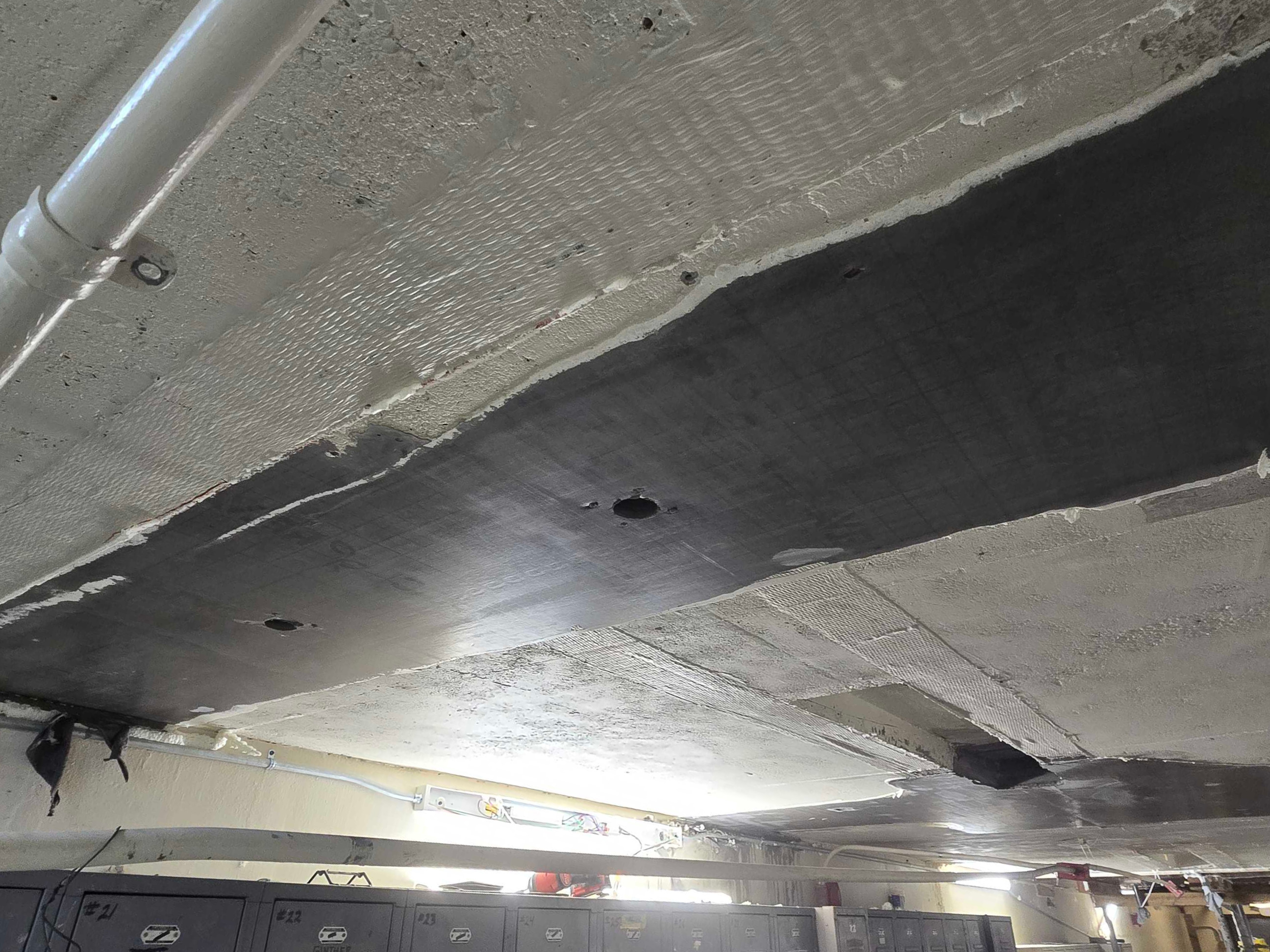
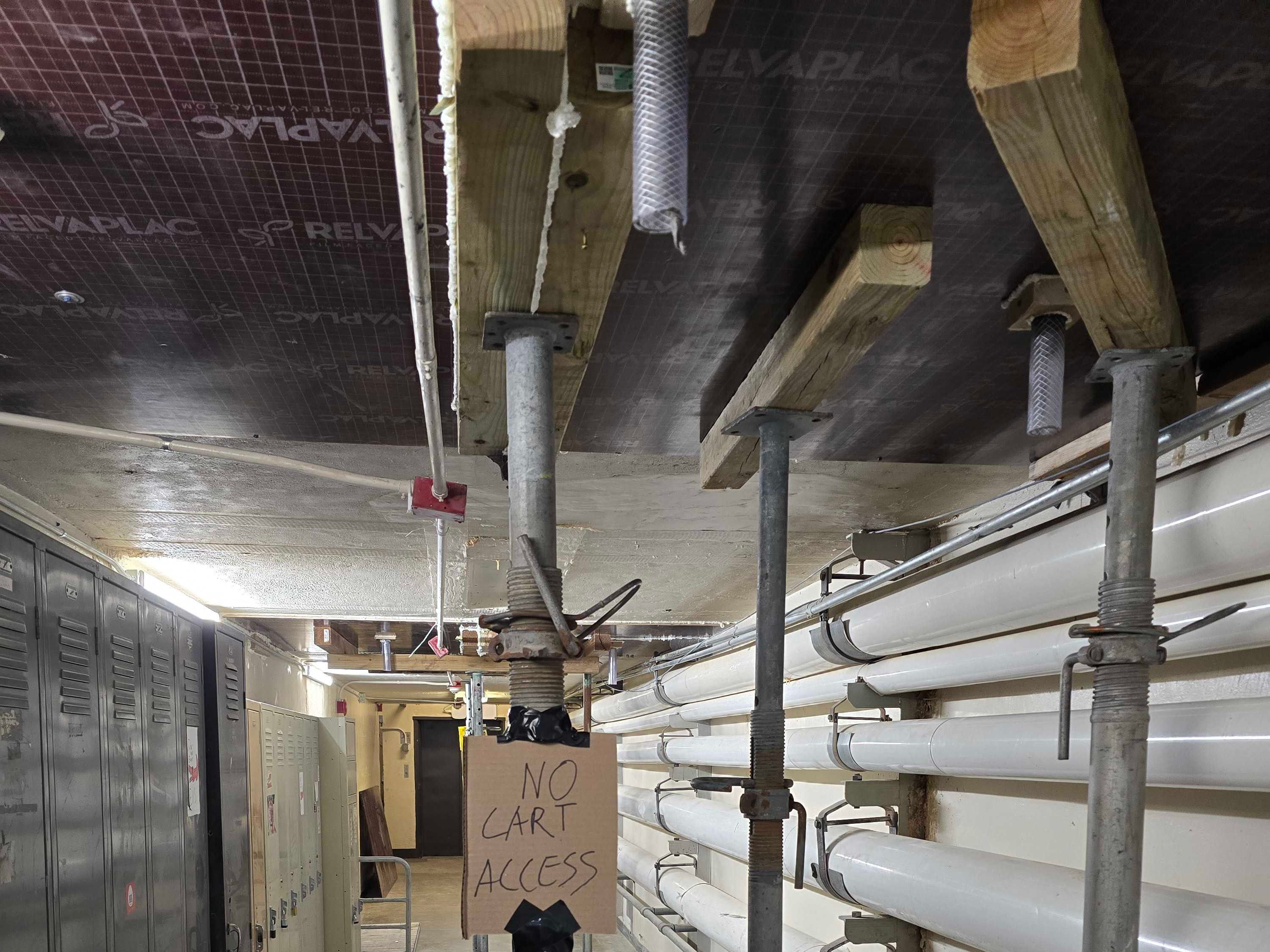
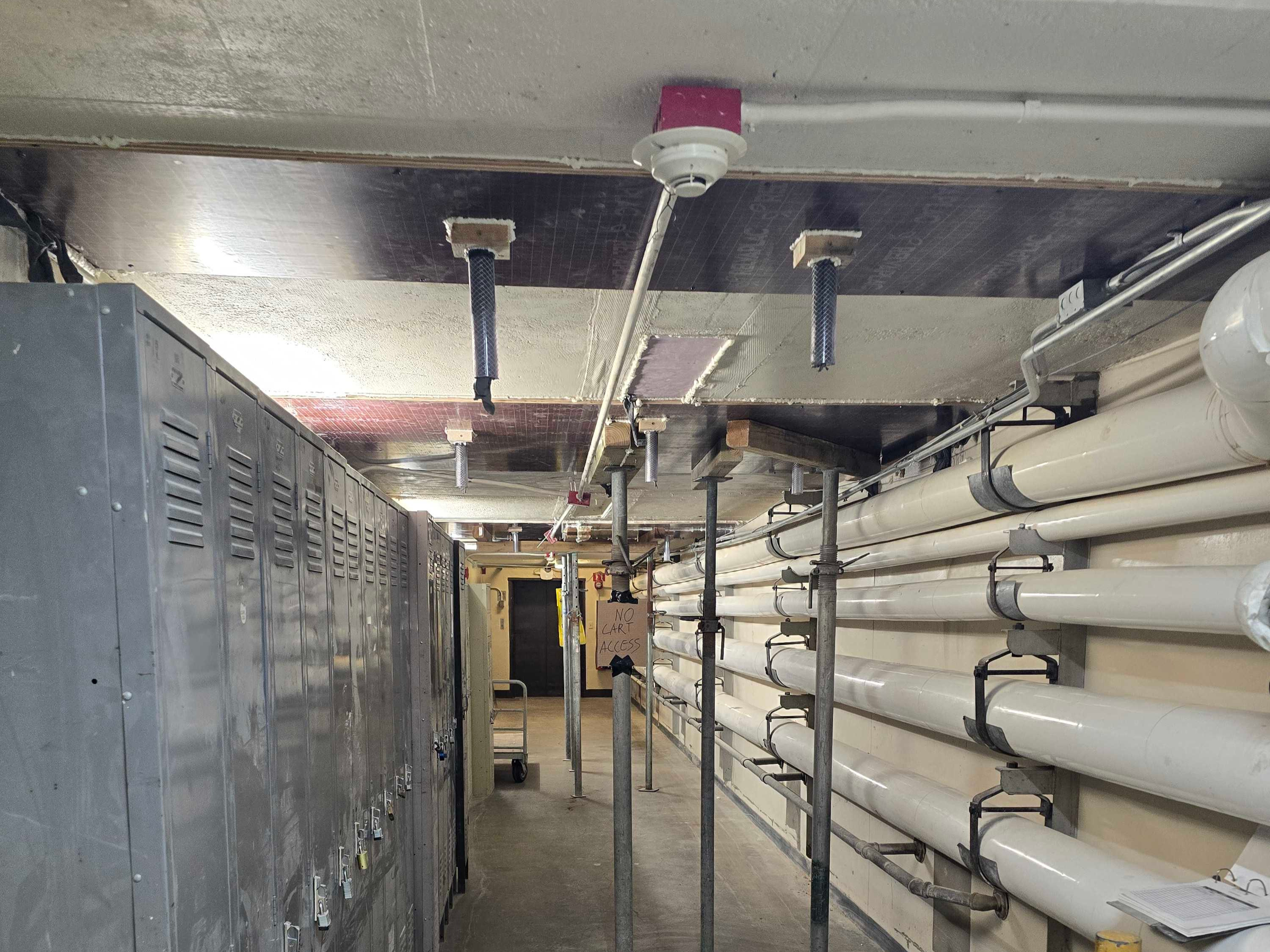
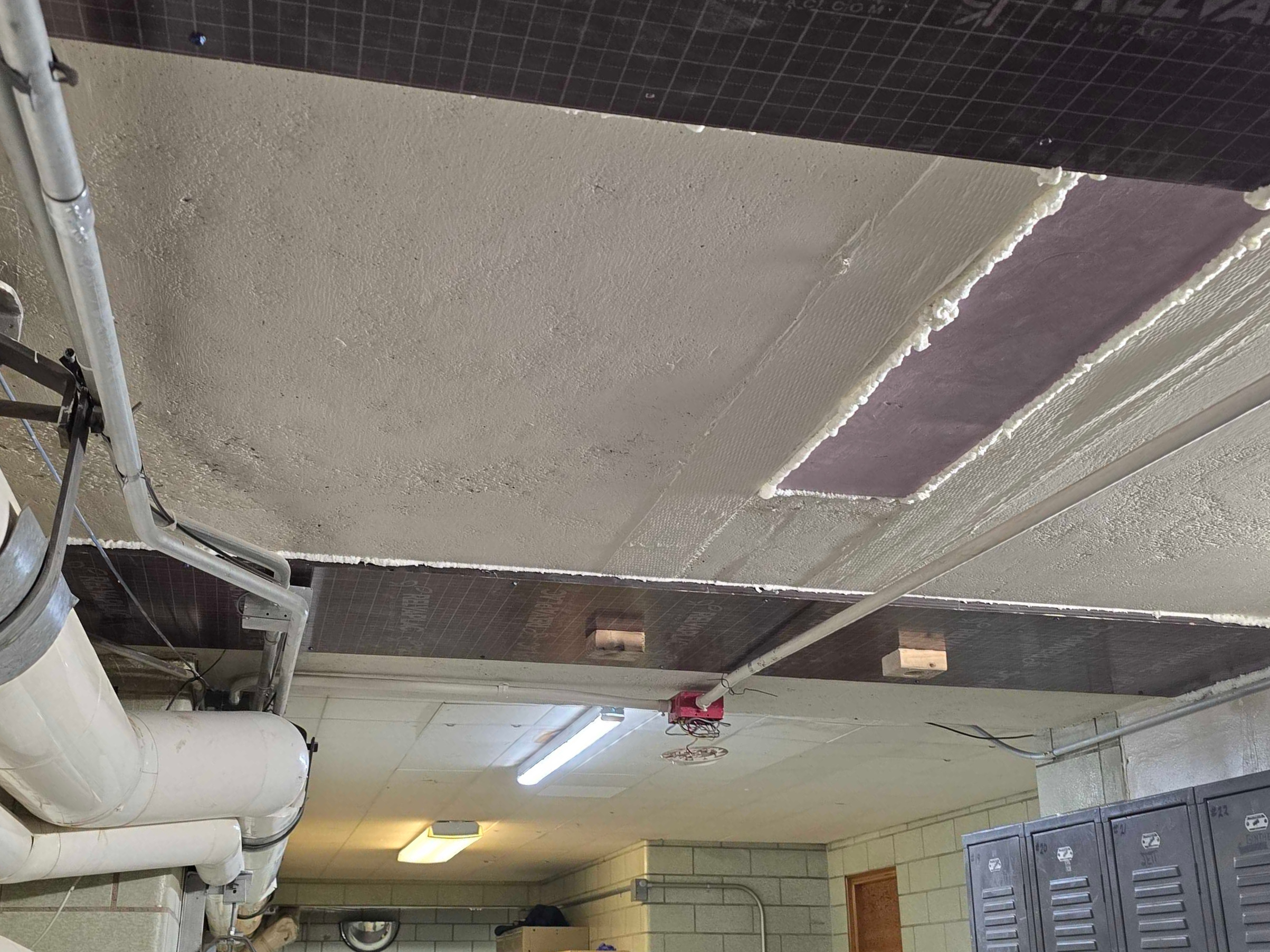
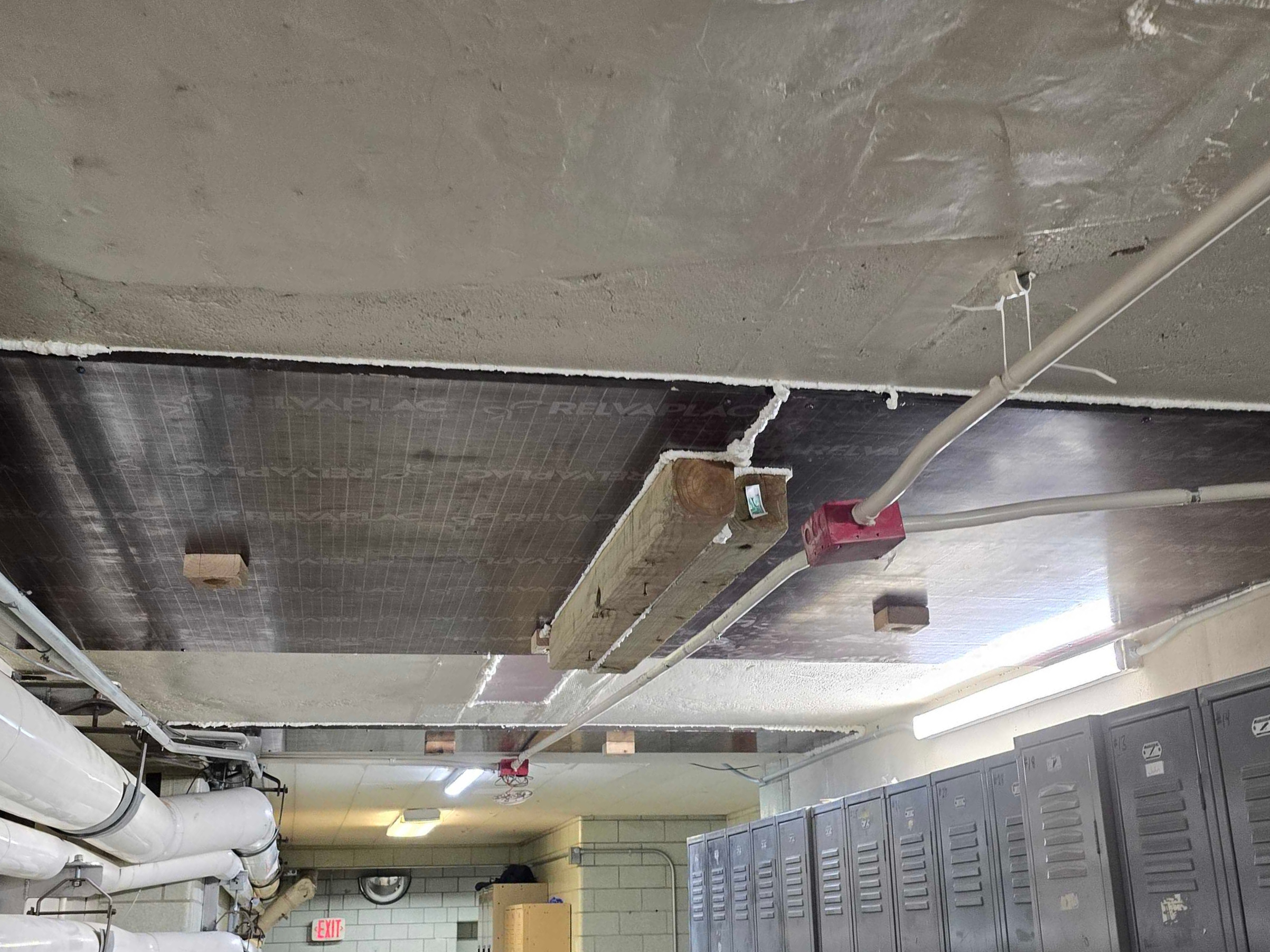
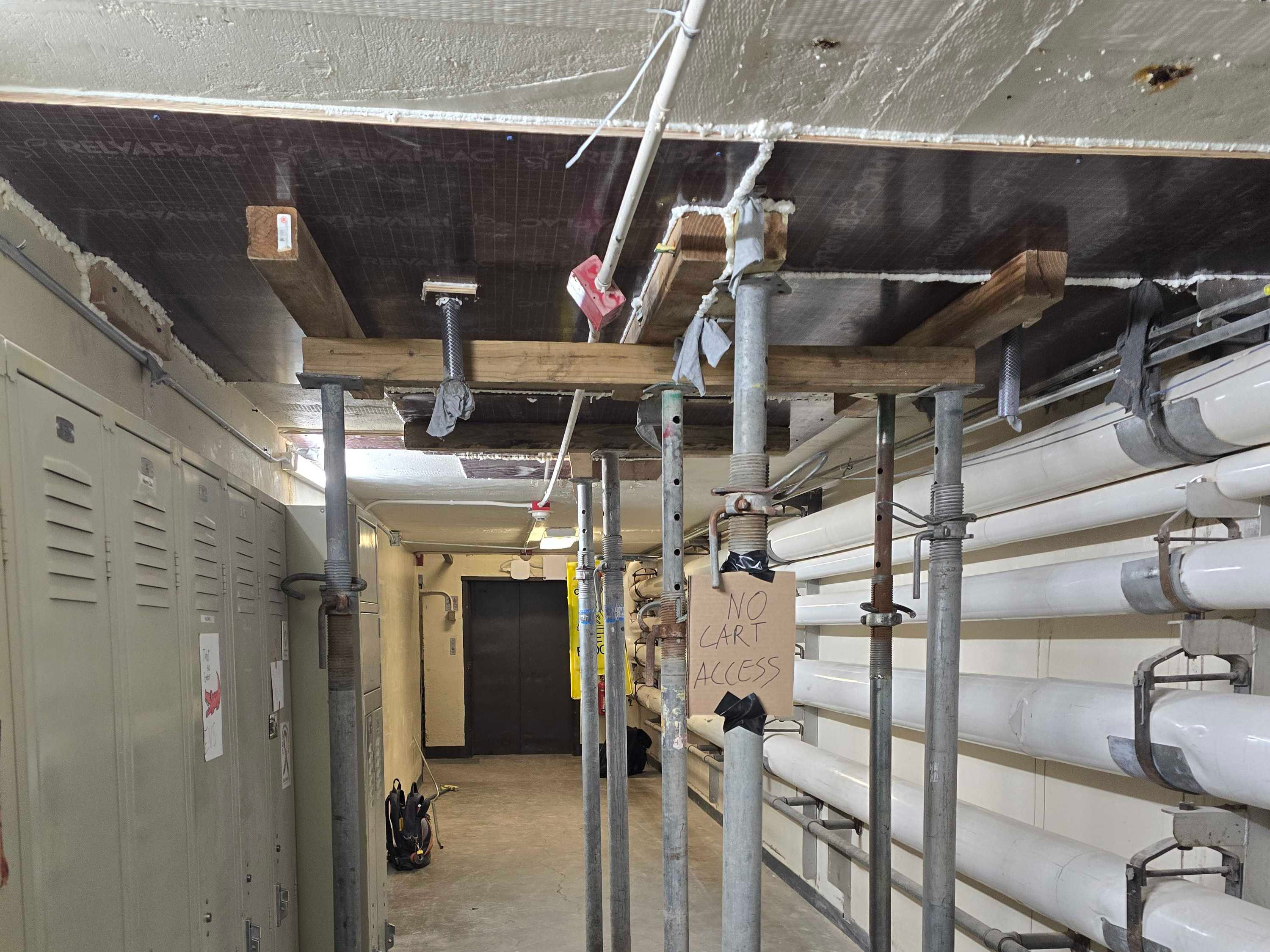
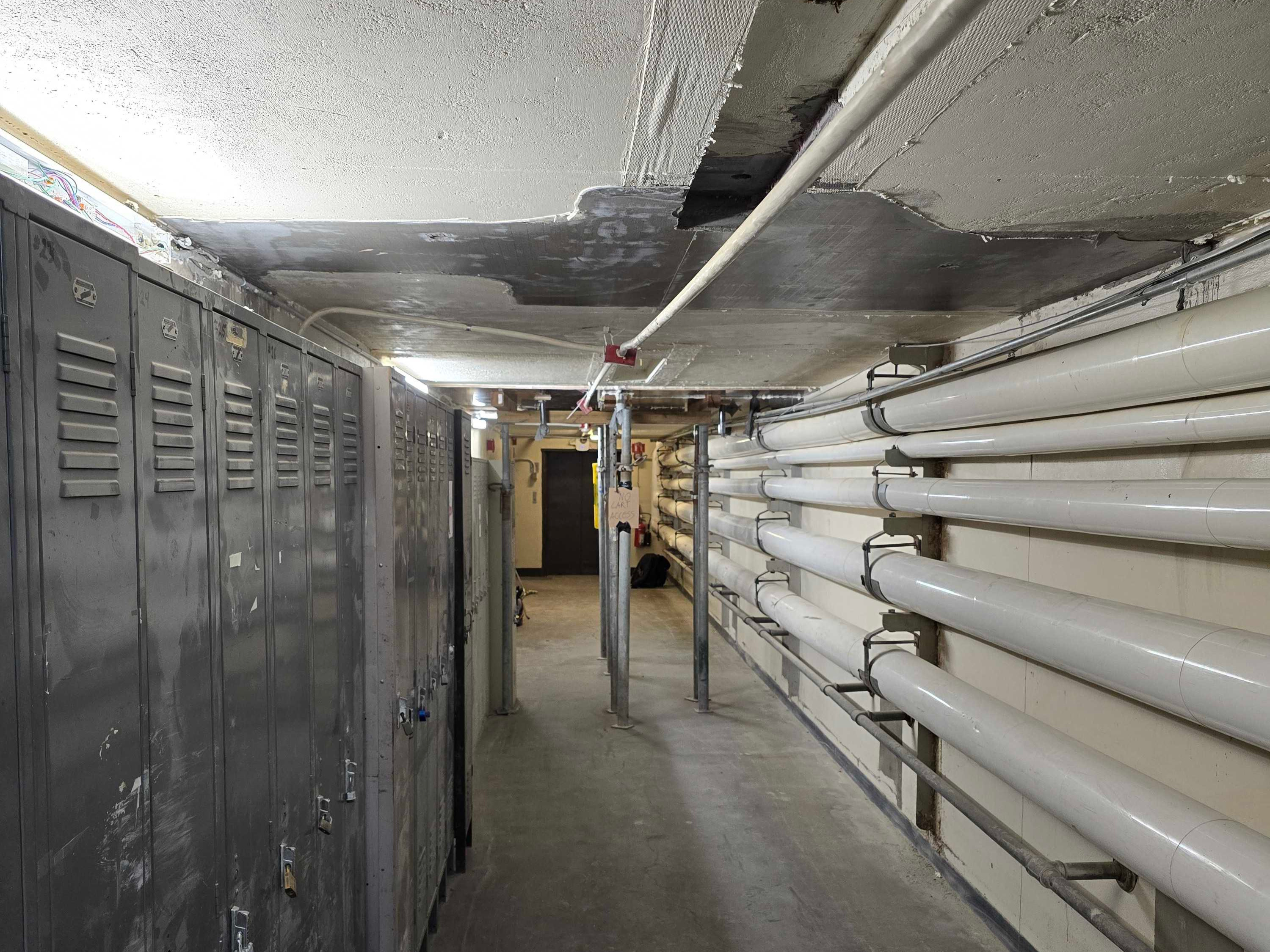
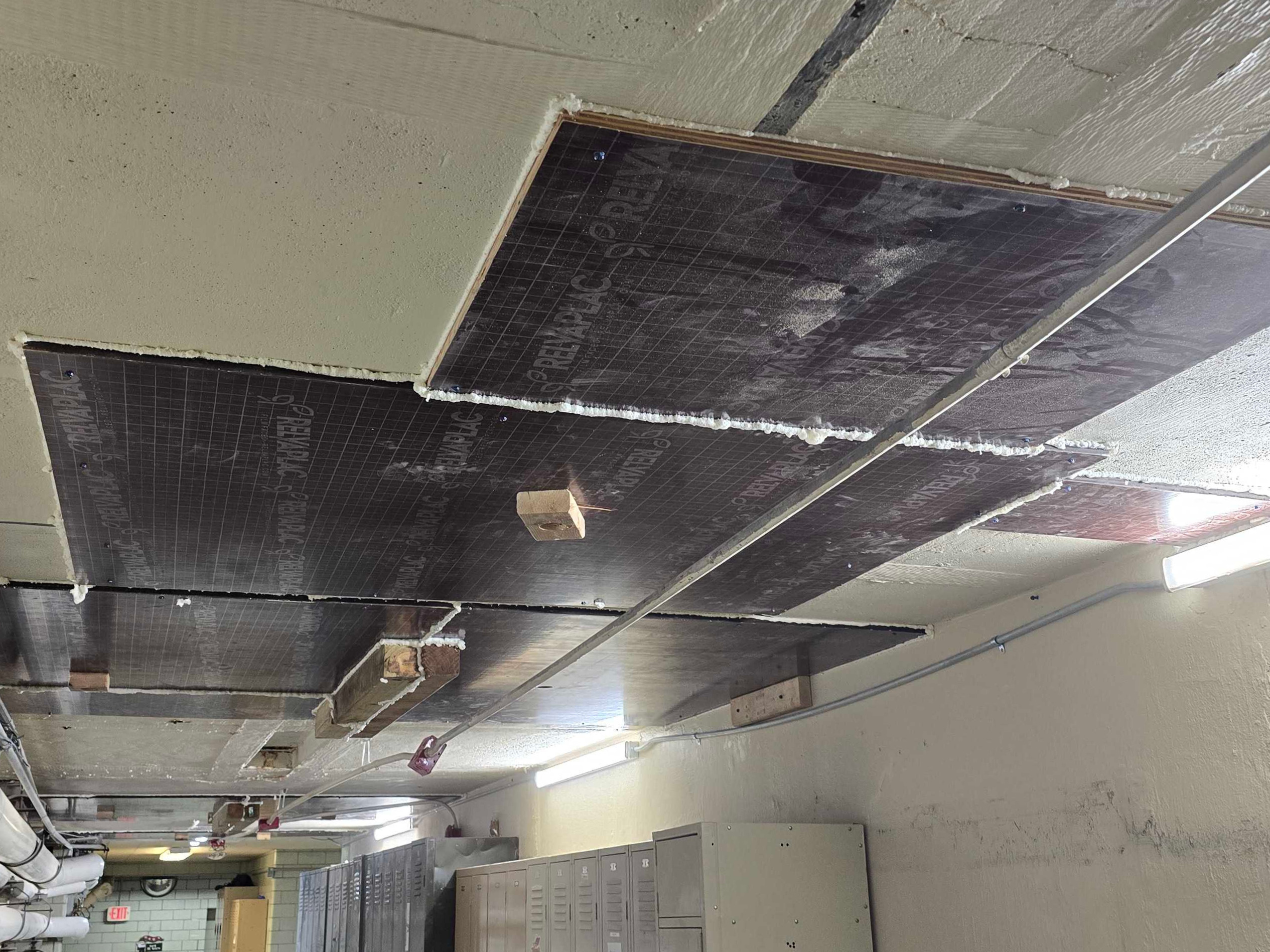
1. All overhead patches demolished, re-poured, and finished; carbon fiber and epoxy injection completed per the engineered drawings.
2. The tunnel remained in service for the entire project - reopened to hospital traffic at the end of every working day.
3. Scope growth was handled transparently through a single owner-approved change order.