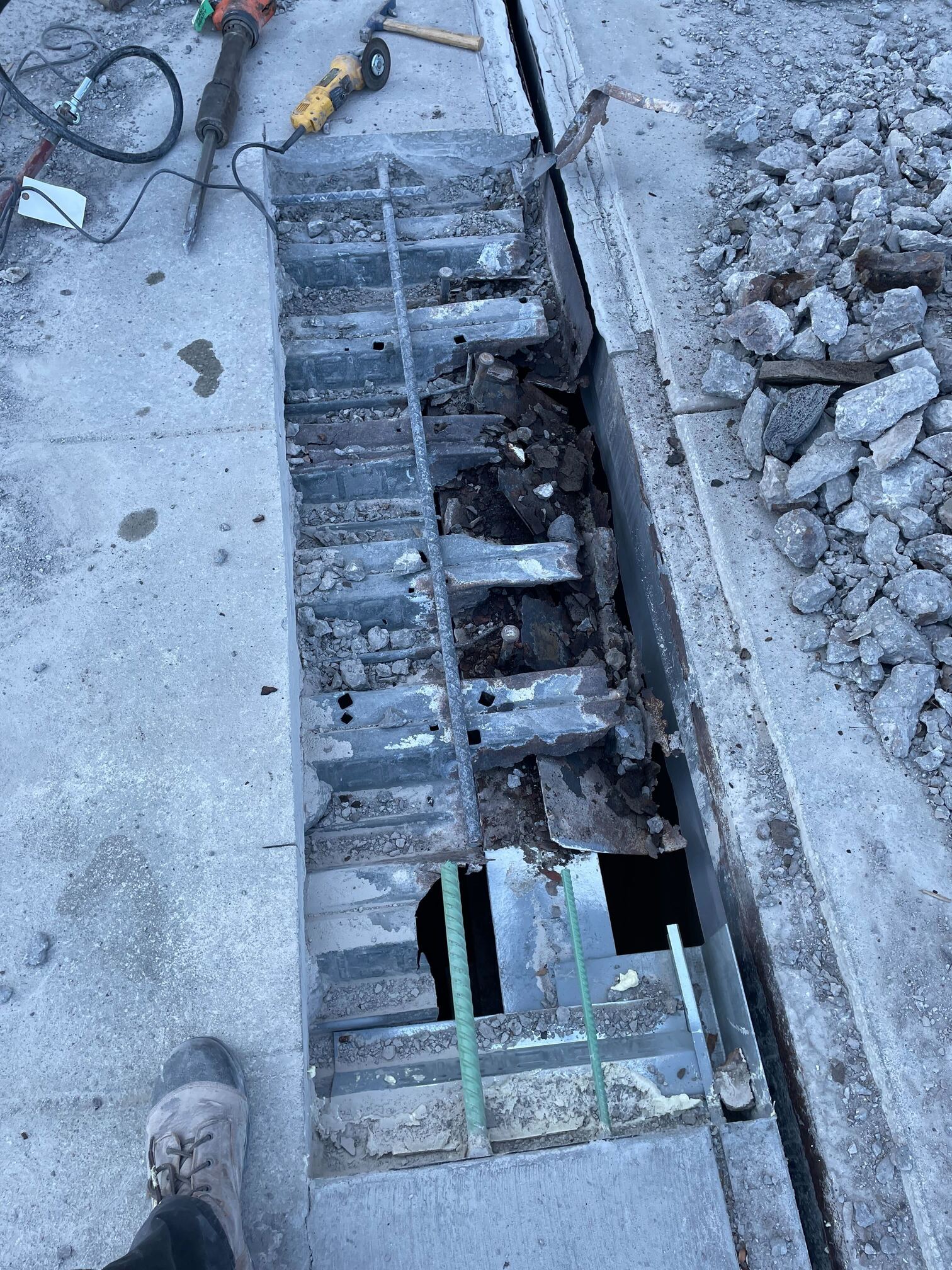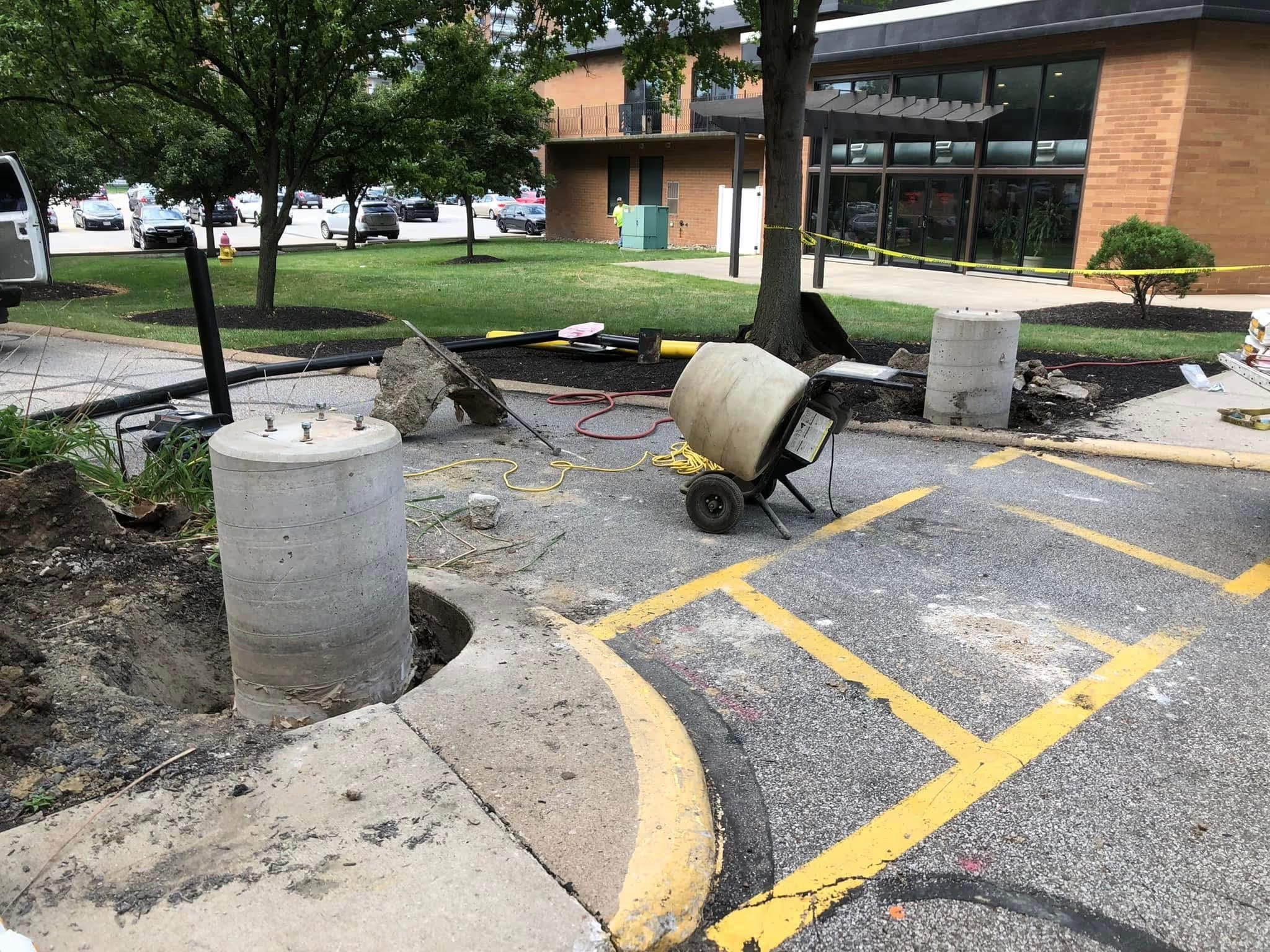
This project involved the restoration of a 30,000-square-foot elevated plaza deck constructed above occupied retail space at a mixed-use development in Northeast Ohio.
The plaza serves as a pedestrian gathering area with planters, pavers, seating walls, and decorative concrete features. Over time, tenants below began reporting persistent water infiltration, ceiling staining, and localized falling debris from deteriorated concrete.
Previous patching and coating attempts had failed to stop the leaks. The owner required a comprehensive solution that would eliminate water intrusion, restore structural integrity, and return the plaza to safe public use.
The project began with a phased exploratory investigation.
Pavers and topping slabs were selectively removed to expose the structural concrete deck. Moisture mapping, sounding, and chloride testing were performed to evaluate the condition of the slab and reinforcing steel.
Findings included:
Sealant joints at wall transitions and penetrations had also deteriorated, allowing water to bypass surface protections and migrate directly into the slab system.
The investigation confirmed that isolated repairs would not resolve the systemic moisture issues.
Occupied Retail Below
Retail tenants remained fully operational throughout the project. Water diversion and debris protection systems were required at all times.
Complex Assembly
The plaza deck included multiple elevation changes, planters, railings, and embedded utilities. Demolition required careful sequencing to avoid damage to structural components and adjacent facade elements.
Moisture Saturation
The deck contained significant trapped moisture, requiring drying time and substrate testing prior to installing new waterproofing systems.
Drainage Deficiencies
Improper slope and undersized drains contributed to long-term performance failures and required corrective design modifications.
The rehabilitation focused on correcting both structural damage and underlying water management deficiencies.
Structural Concrete Restoration
All unsound concrete was removed to expose deteriorated reinforcement. Corroded reinforcing steel was cleaned, supplemented where required, and protected prior to placement of high-performance repair mortars.
Deck Reprofiling and Drainage Correction
The deck was re-sloped using a lightweight fill system to promote positive drainage to new and existing drain assemblies. Drain bodies were replaced or modified to integrate with the new waterproofing system.
Below-Grade Waterproofing Installation
A fully adhered, reinforced waterproofing membrane system was installed across the structural slab, integrated at vertical transitions, penetrations, and drains. Terminations were carefully detailed to prevent future water migration.
Pedestrian Coating and Overlay System
A durable pedestrian traffic coating system was applied in exposed walking areas, providing slip resistance and long-term surface protection.
Sealant and Joint Replacement
All control joints, wall transitions, and penetrations were resealed using compatible, movement-capable sealants to complete the envelope.
Substrate preparation, moisture testing, and manufacturer-aligned installation procedures were strictly followed to ensure long-term performance.
The project was executed in phases over five months during late spring and summer.
Work areas were segmented to maintain partial pedestrian access and limit disruption to retail tenants below. Temporary waterproof coverings were installed at the end of each workday to prevent active leaks during construction.
Coordination between field crews, property management, and tenants was ongoing, particularly during demolition and drain replacement operations.
Daily inspections ensured that membrane terminations and transitions were properly installed before subsequent layers were applied.
The completed rehabilitation:
The plaza was returned to full public use with improved safety, durability, and long-term performance.
Waterproofing failures are often systemic
Surface-level leaks frequently indicate broader membrane and drainage deficiencies.
Drainage drives durability
Proper slope and functional drains are essential to long-term plaza performance.
Moisture testing cannot be skipped
Installing waterproofing over saturated substrates compromises adhesion and longevity.
Integration is critical
Membranes, coatings, joints, and drains must function as a unified system — not as independent components.