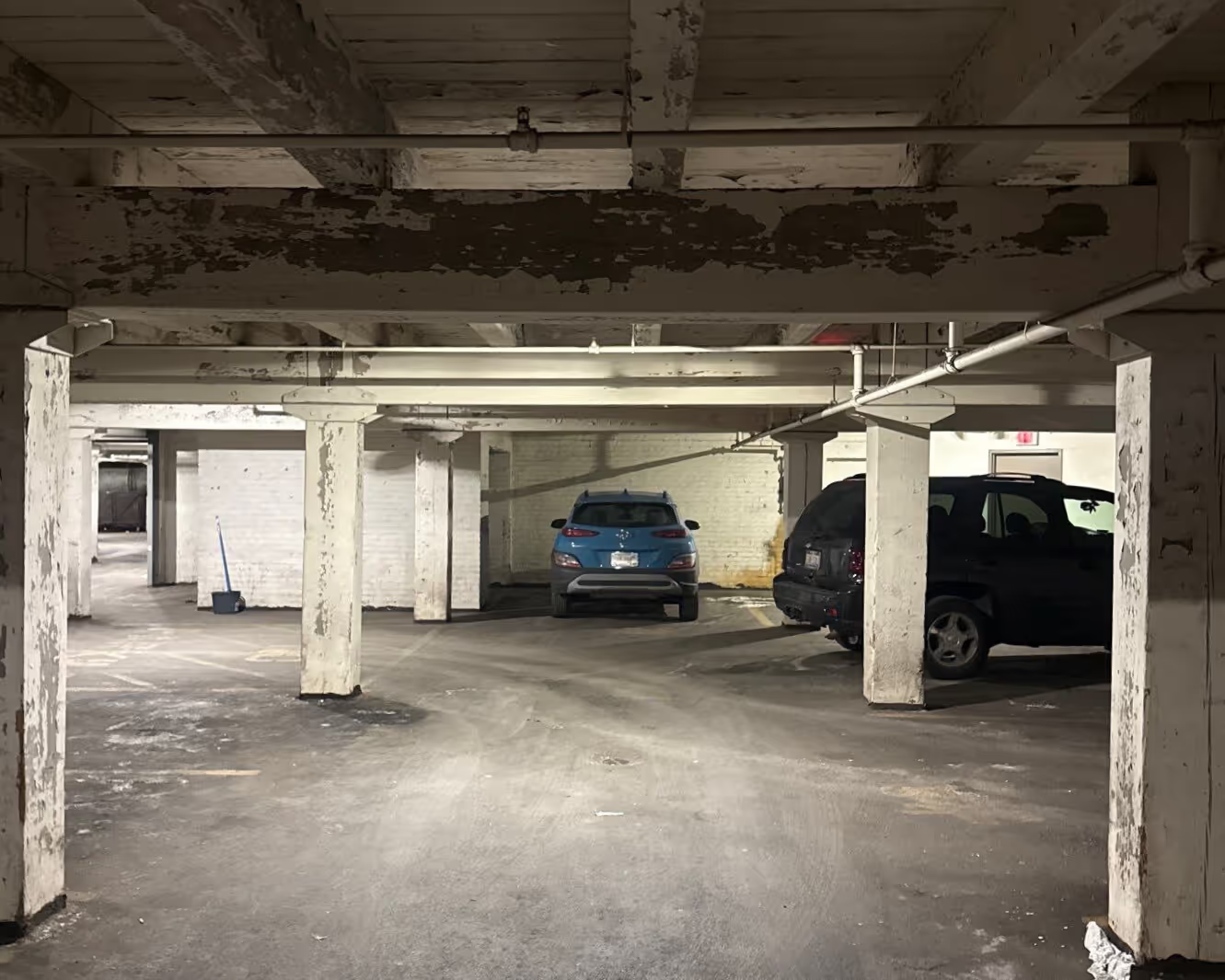
This project involved the restoration of a four-level, 1985-era parking structure attached to a mixed-use commercial building in Northeast Ohio. The garage serves retail tenants at ground level with office space above and remains in constant daily use.
Ownership reported persistent water leaks into occupied tenant spaces, falling concrete at the ramp edges, and visible corrosion at exposed steel framing. Previous coating applications had failed prematurely, and temporary patching repairs were no longer effective.
The objective was to restore structural integrity, eliminate water intrusion, and extend the service life of the garage—while keeping the facility operational throughout construction.
The project began with a comprehensive condition assessment, including visual inspection, hammer sounding, chloride testing, and selective exploratory demolition.
Findings revealed:
•Widespread delamination and spalling in elevated slabs due to de-icing salt exposure
•Active reinforcing steel corrosion with measurable section loss
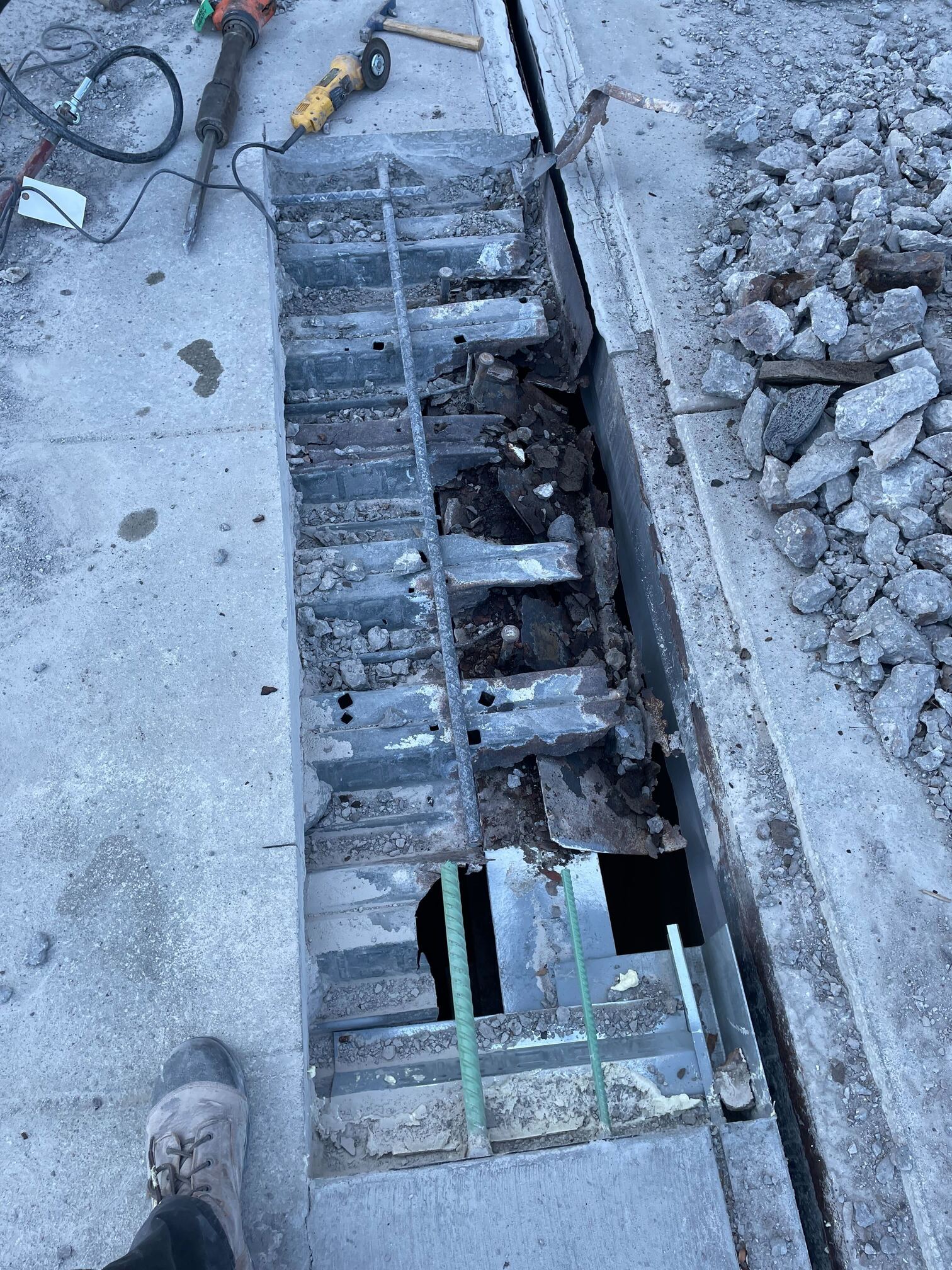
•Failed expansion joints allowing continuous water infiltration
•Deteriorated metal deck and localized steel beam corrosion at ramp transitions
•Traffic coating systems that had debonded due to improper surface preparation and moisture vapor transmission
•Water infiltration had migrated through slab cracks and failed joints, accelerating corrosion in both concrete and structural steel components.
Coordination with the structural engineer resulted in a phased repair program targeting both structural capacity and long-term durability.
Occupied and Active Environment
The garage remained open throughout the project. Work had to be phased to maintain parking capacity and preserve tenant access.
Water Management
Active leaks into retail spaces below required temporary diversion systems before permanent repairs could begin.
Structural Uncertainty
Initial investigations suggested localized deterioration. Once demolition began, additional areas of compromised reinforcing and steel framing were uncovered.
Seasonal Exposure
Construction extended into late fall, requiring careful monitoring of temperatures for concrete placement and coating installation
The repair program integrated multiple disciplines:
Structural Concrete Repairs
Full-depth slab repairs were performed in areas of advanced corrosion. Partial-depth repairs addressed delaminated regions with intact reinforcement. Corroded reinforcing steel was cleaned, supplemented, or replaced where section loss exceeded acceptable limits.
Structural Steel Rehabilitation
Localized steel beam repairs were completed at ramp transitions. Corroded sections were reinforced with welded plate additions designed to restore load paths without full member replacement.
Expansion Joint Replacement
Failed joint assemblies were removed and replaced with traffic-rated systems designed to accommodate structural movement and prevent water intrusion.
Traffic-Bearing Waterproofing System
After substrate preparation and moisture testing, a multi-layer vehicular traffic coating system was installed across drive aisles and ramps. The system was selected based on actual traffic patterns and exposure conditions, not simply prior specifications.
The approach addressed root causes—water infiltration and corrosion—rather than applying surface-level fixes.
Work was sequenced level by level to maintain continuous access for tenants and visitors. Temporary barriers, signage, and pedestrian protection systems were installed to maintain safety.
Night and weekend work was utilized for high-traffic areas to reduce disruption. Concrete repairs were coordinated carefully to allow adequate curing time before reopening sections to vehicle loads.
Daily communication with ownership and property management ensured alignment on progress, schedule adjustments, and tenant notifications.
The project was completed over five months.
The rehabilitation:
•Eliminated active water infiltration into occupied spaces
•Restored structural capacity in deteriorated slabs and beams
•Replaced failing joint systems with durable, movement-capable assemblies
•Installed a properly integrated traffic coating system designed for Northeast Ohio freeze–thaw conditions
•Extended the projected service life of the structure by an estimated 15–20 years
•The garage remained operational throughout the project, and tenant disruption was minimized.
Water is the root driver
Surface coating failures are often symptoms of deeper waterproofing and joint issues.
Phasing matters
In occupied parking structures, sequencing and communication are as critical as technical execution.
Verify substrate conditions
Moisture testing and surface preparation directly impact long-term coating performance.
Integrated repairs outperform isolated fixes
Addressing concrete, steel, joints, and waterproofing as one coordinated system leads to more predictable durability.