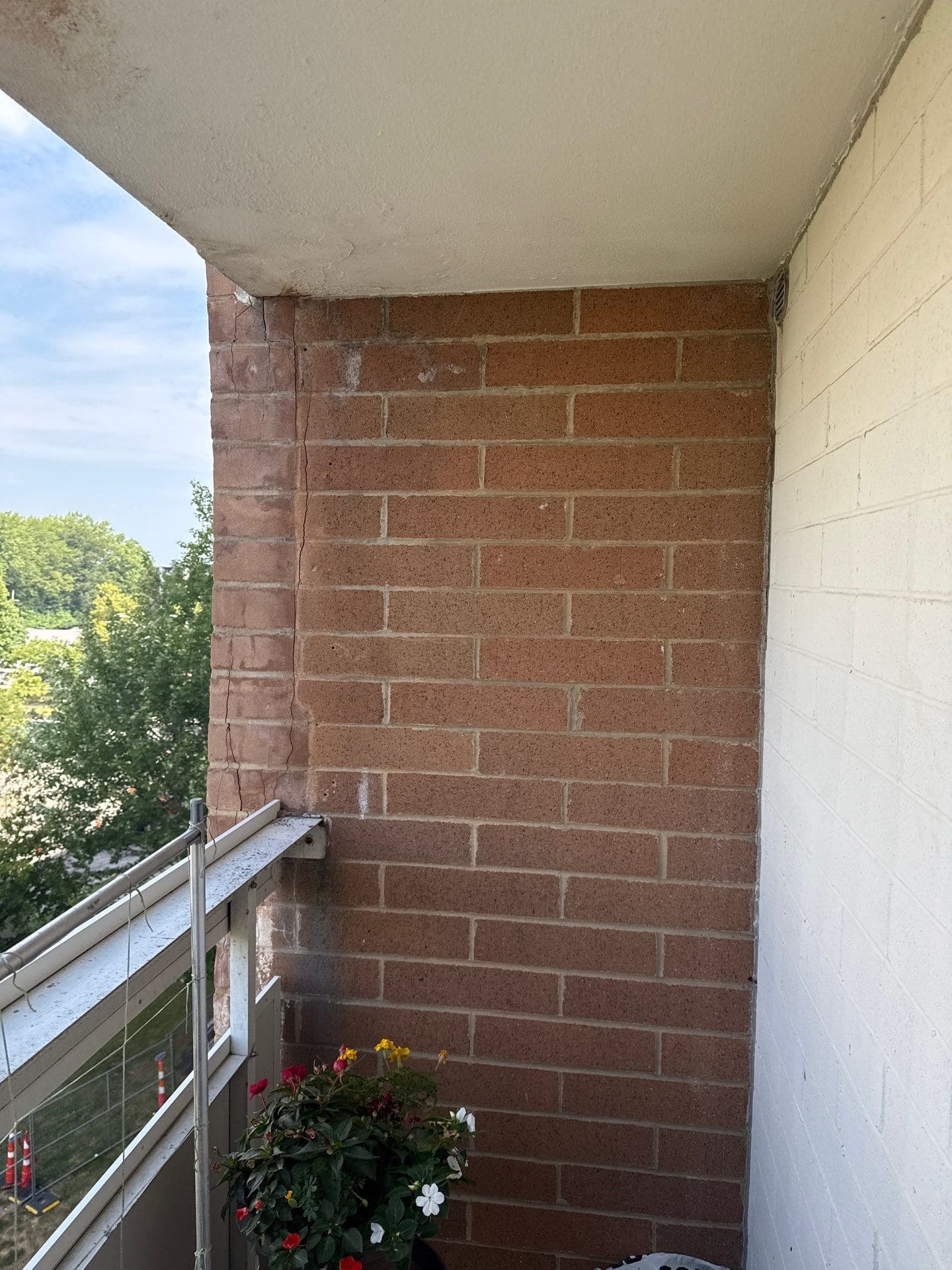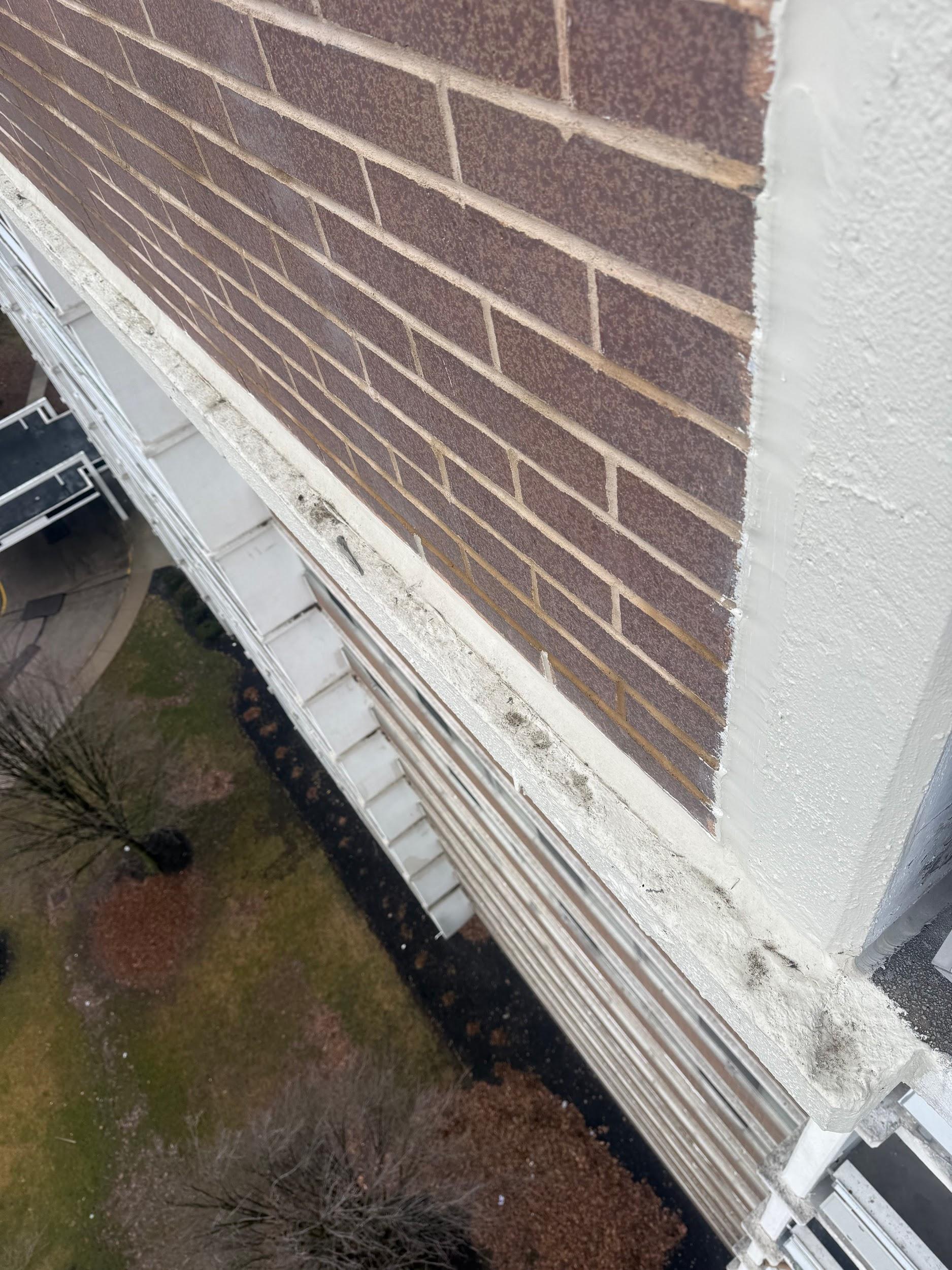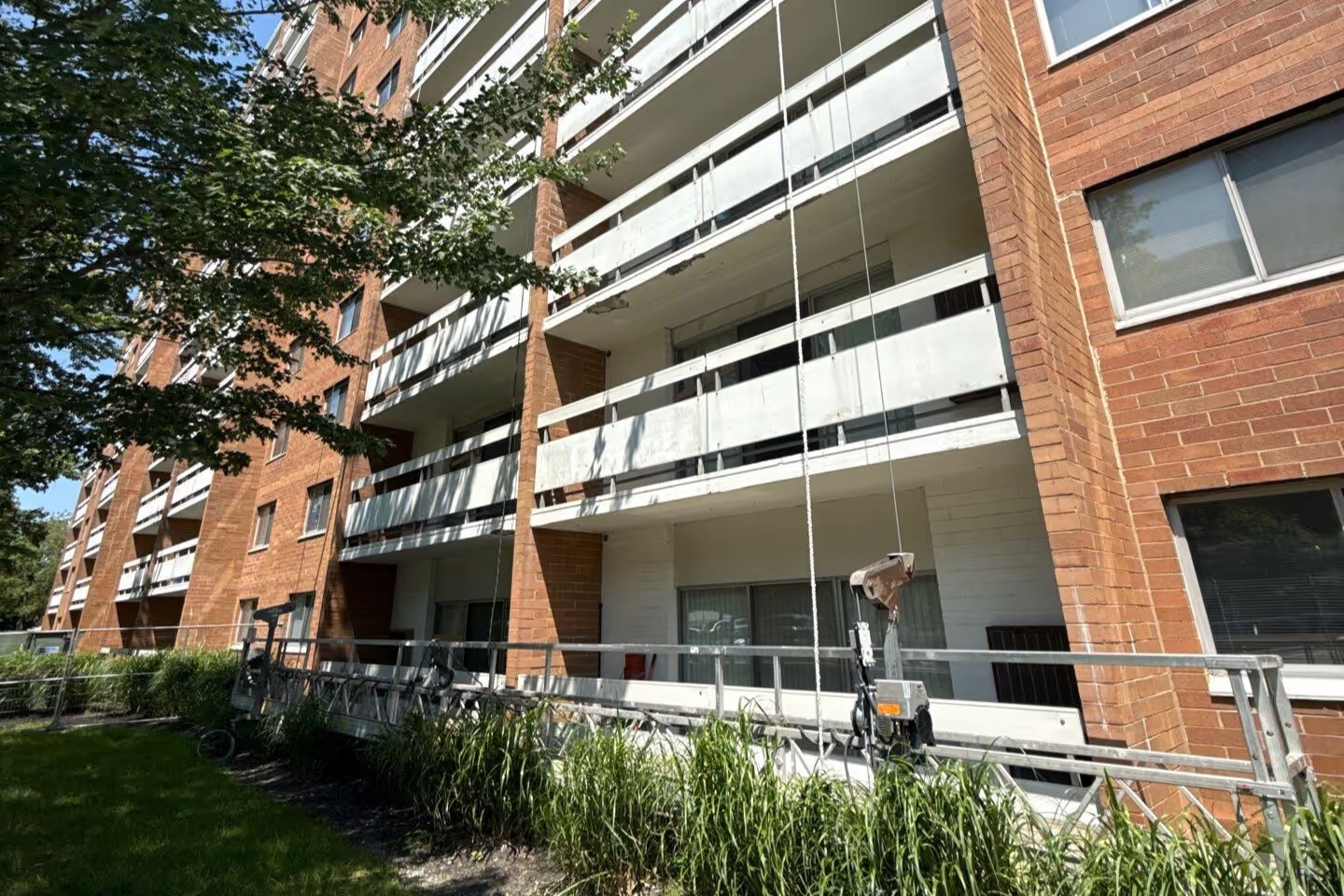
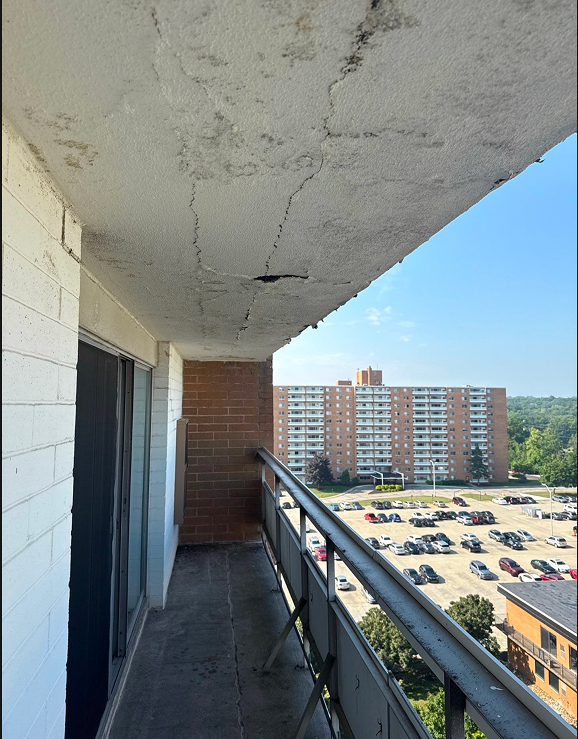
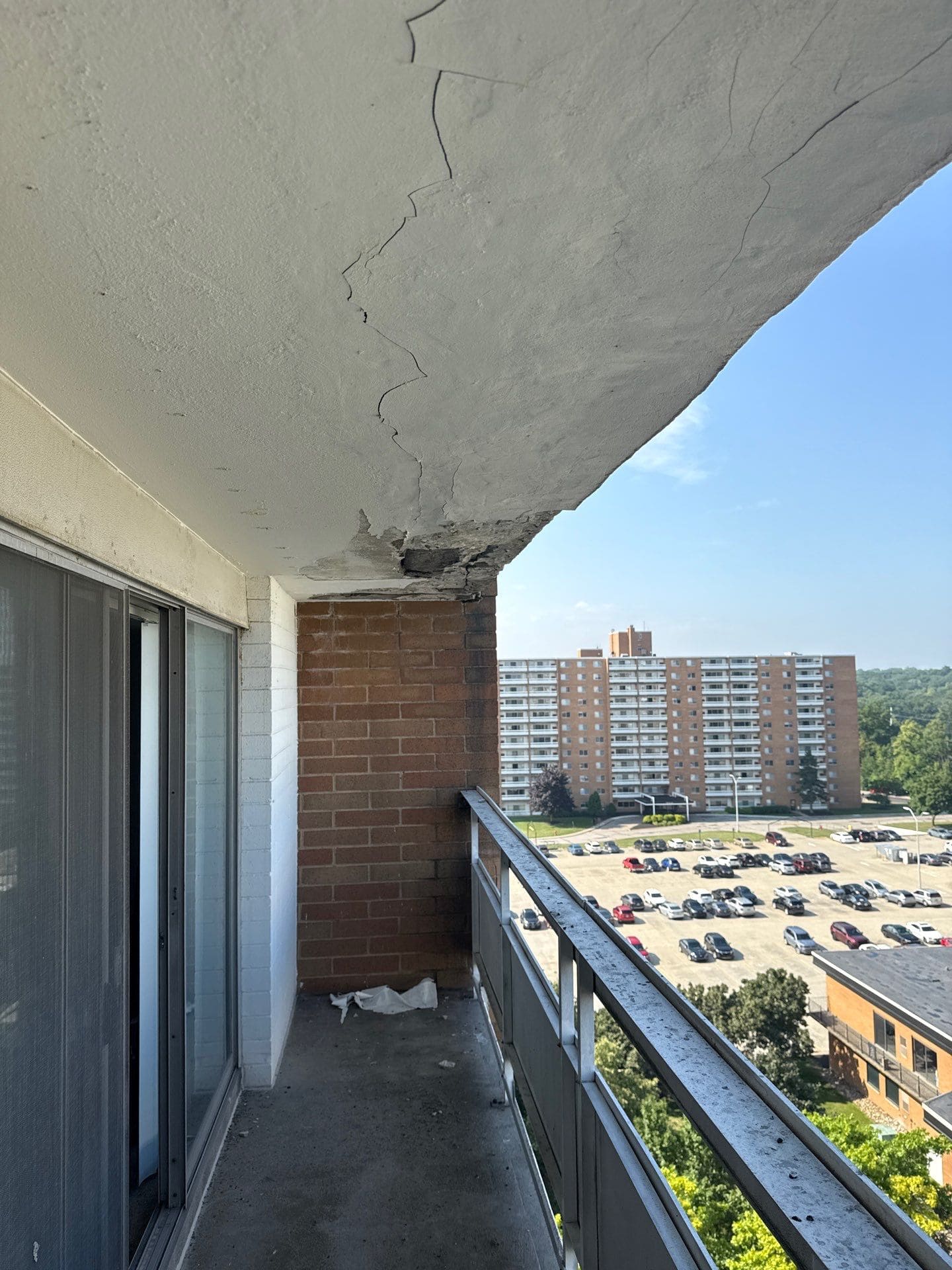
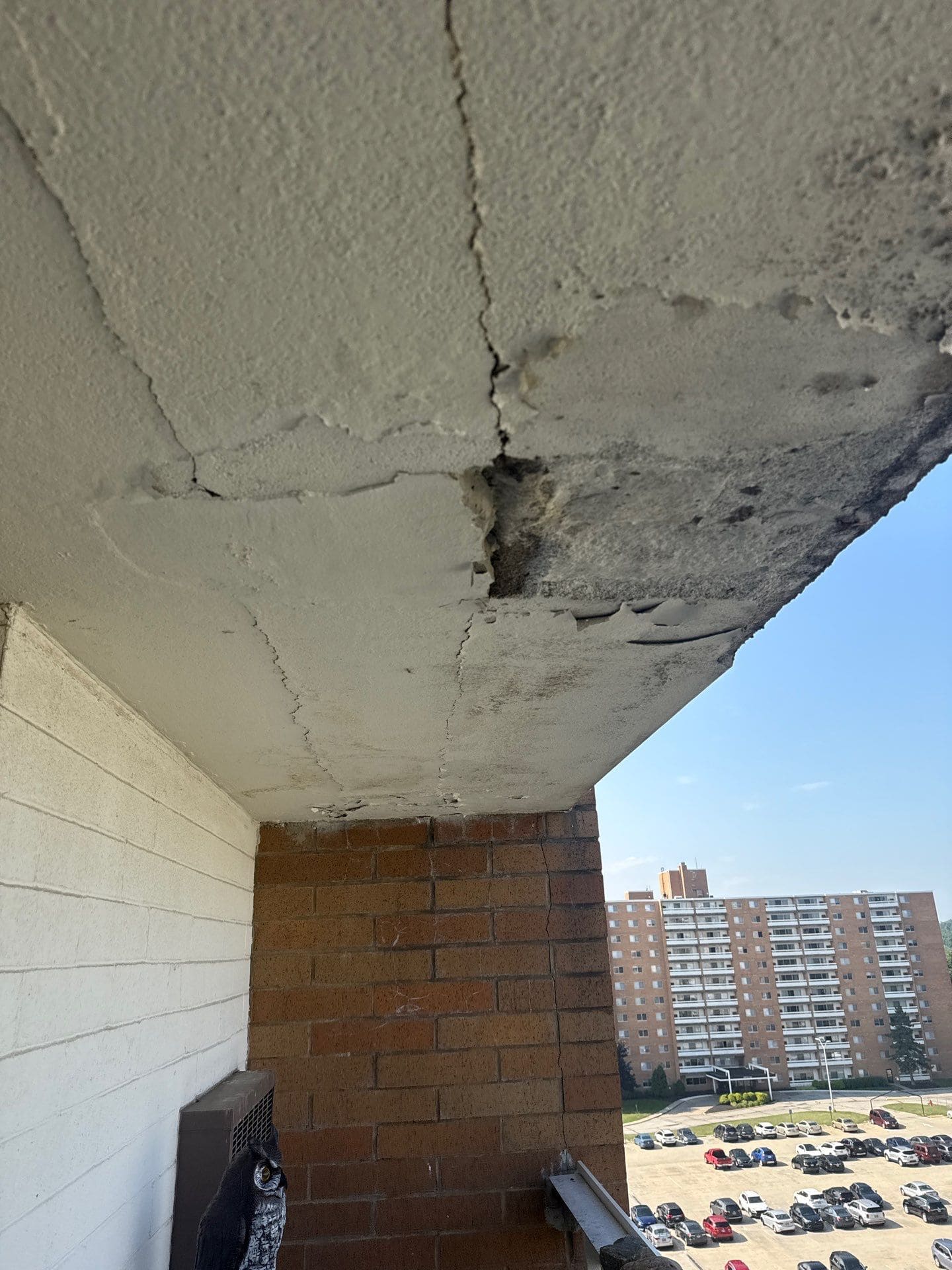
The building is a 12-story, multifamily masonry structure located in Cleveland, Ohio, built in 1967. Over time, the building began exhibiting visible failure of its concrete balcony slabs, including severe spalling, exposed reinforcement, and active water intrusion.
The deterioration was most significant from the sixth floor upward, where falling concrete posed life-safety risks to residents below. Repairs were essential to restore safety, integrity, and livability to the property.
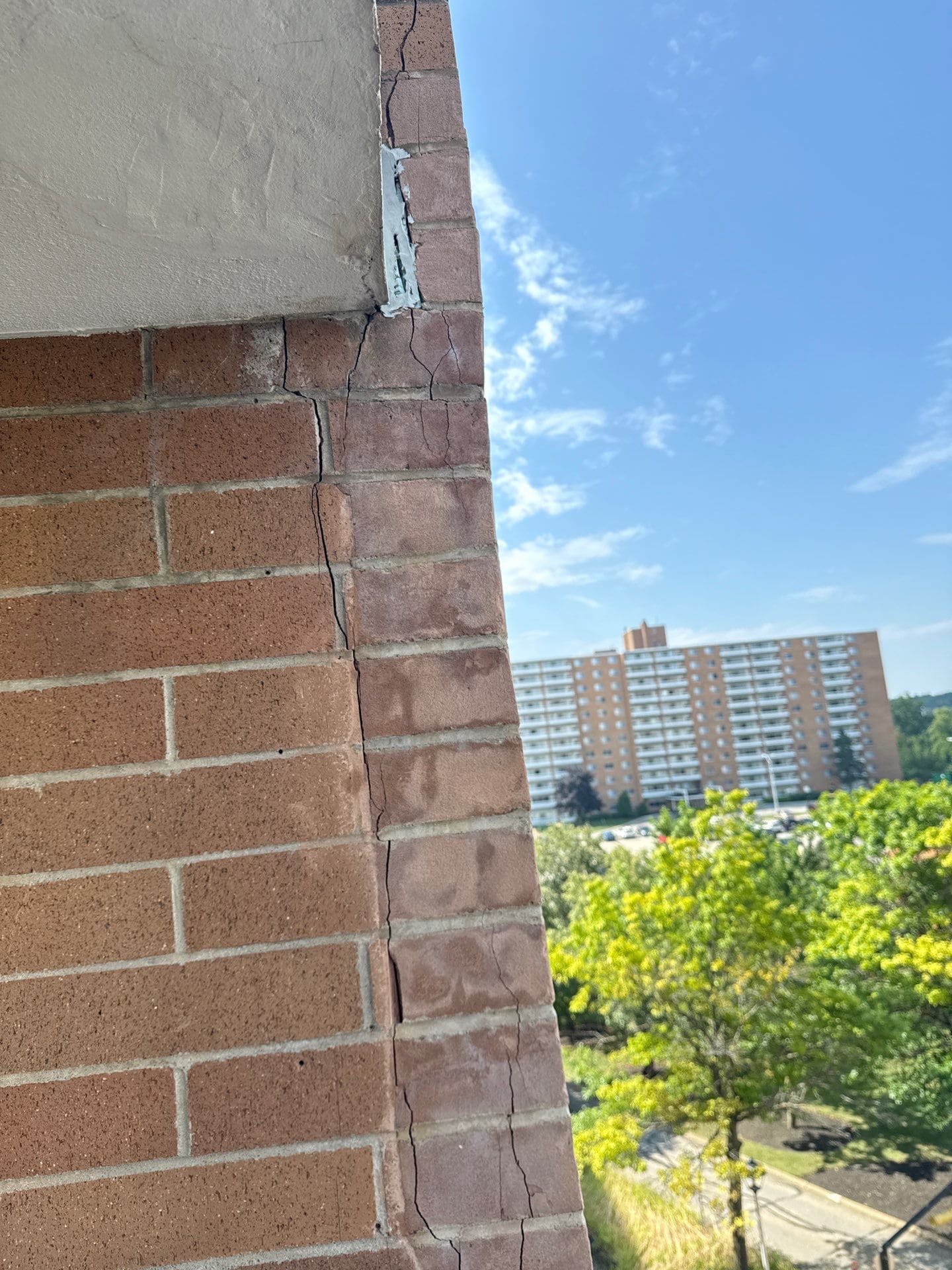
The investigative phase followed industry-standard concrete repair assessment procedures. Once access was established, the team conducted detailed visual inspections and sounding tests to identify loose, spalled, or cracked concrete and deflection in balcony slabs.
Coordination with the structural engineer was critical. Findings were documented through field photos and reports, which informed the engineer’s prescribed repairs.
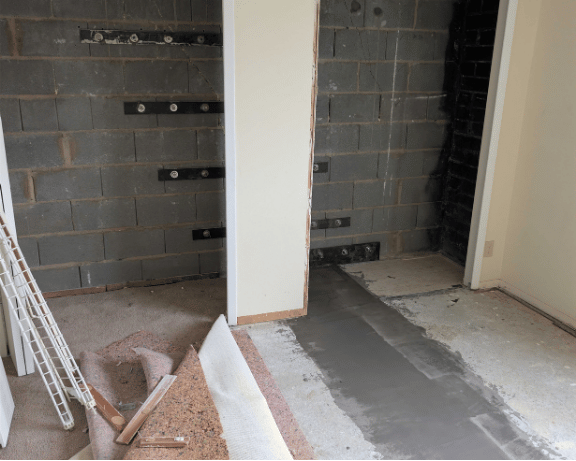
During exploratory demolition, the team discovered a major discrepancy between the original as-built drawings and the actual construction, revealing that the building was not constructed as designed, resulting in inherent design deficiencies that contributed to the failures observed.
The project presented multiple layers of complexity:
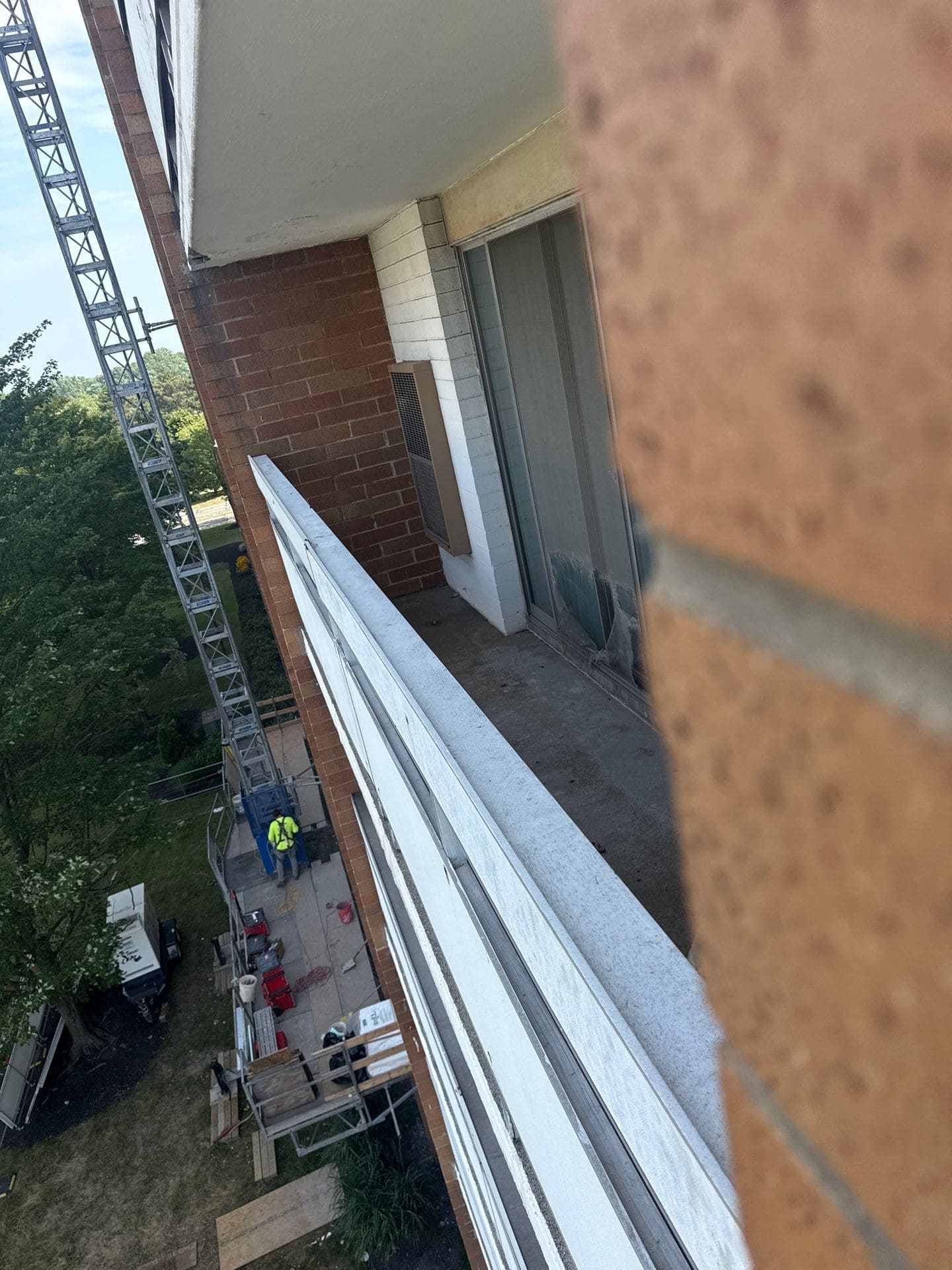
Work had to be performed at over 120 feet above ground. Traditional swing stages were deemed inadequate due to load limitations and safety concerns. The team engineered a custom mast climber system, designed specifically for this facade. Though 5–7 times more costly than conventional platforms, it allowed safer access, increased capacity from 1,000 to 6,000 pounds, and improved efficiency.
Cleveland’s winter conditions created additional challenges. (Repairs of this type typically require ambient temperatures above 40°F). To maintain progress, the team enclosed the work zone in a temporary winter enclosure, using heated air, concrete curing blankets, and pre-heated repair materials to achieve appropriate curing temperatures.
The initial budget was based on visual inspections, but once work began, it became clear that damage was far more extensive. Structural deterioration, chloride intrusion, and failing reinforcement more than doubled both the budget and schedule.
With residents occupying the building, the team had to ensure continuous, safe access. Ground-level protection was installed above the main entrance, allowing entry and exit during restoration.
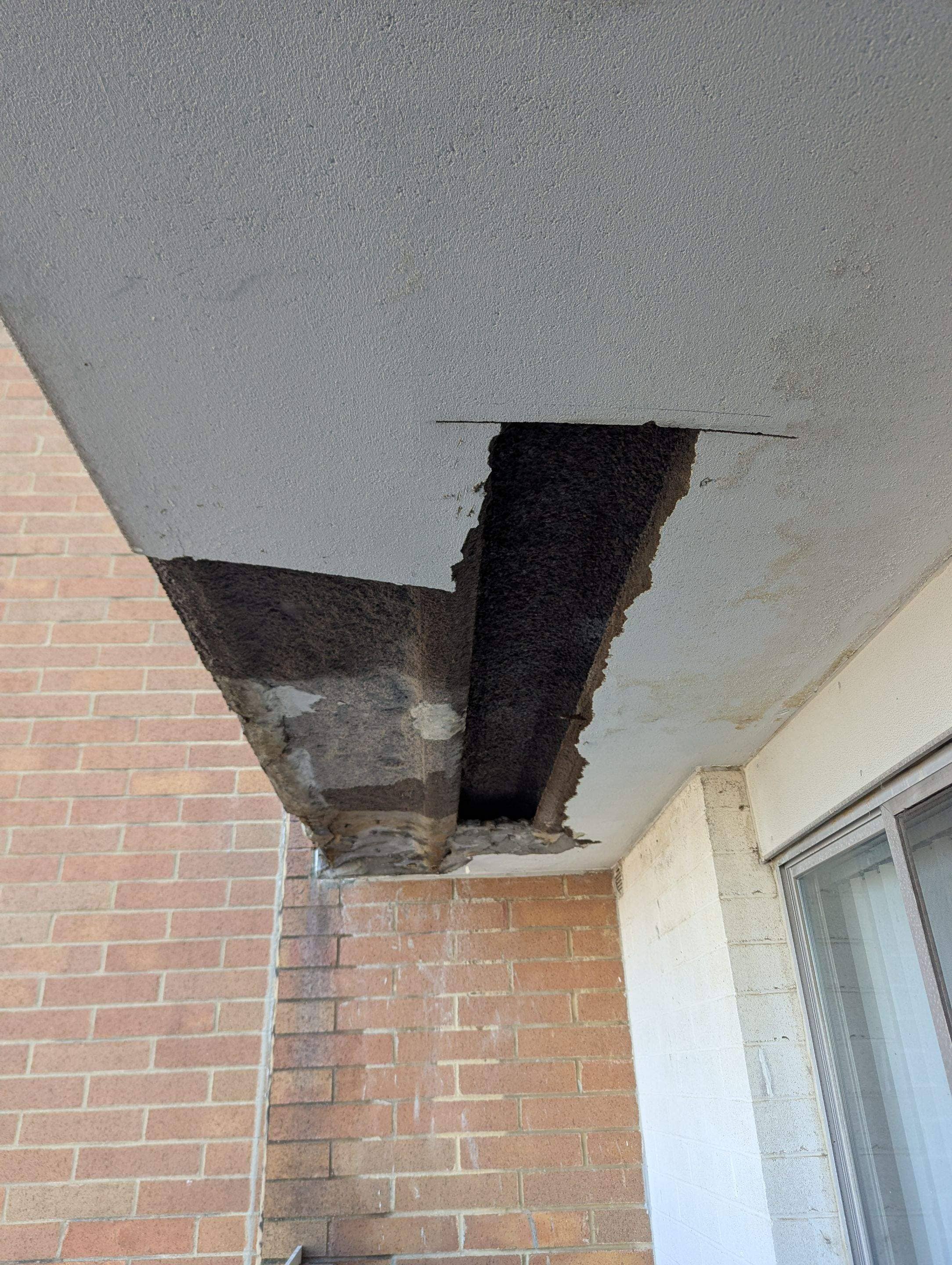
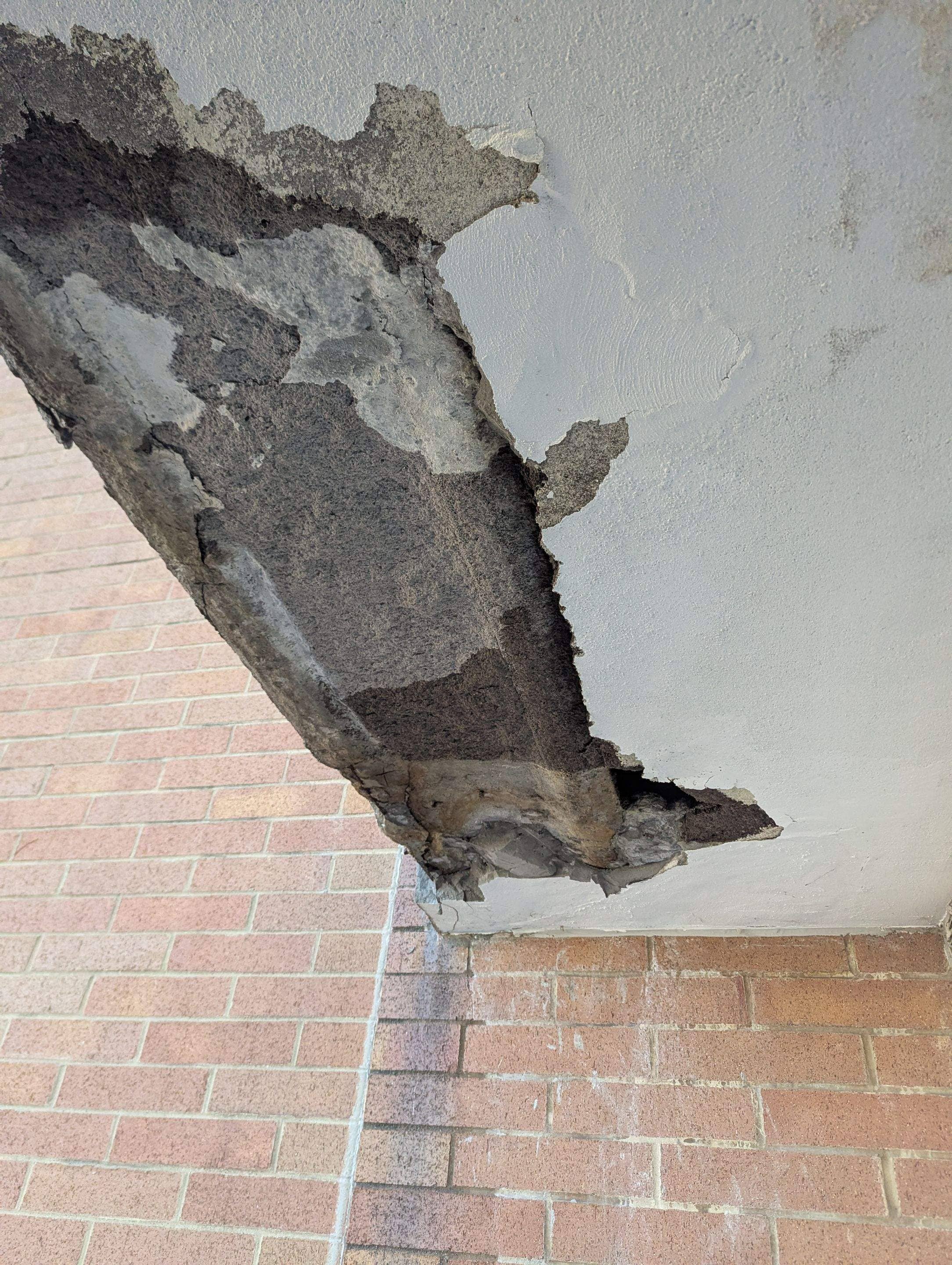
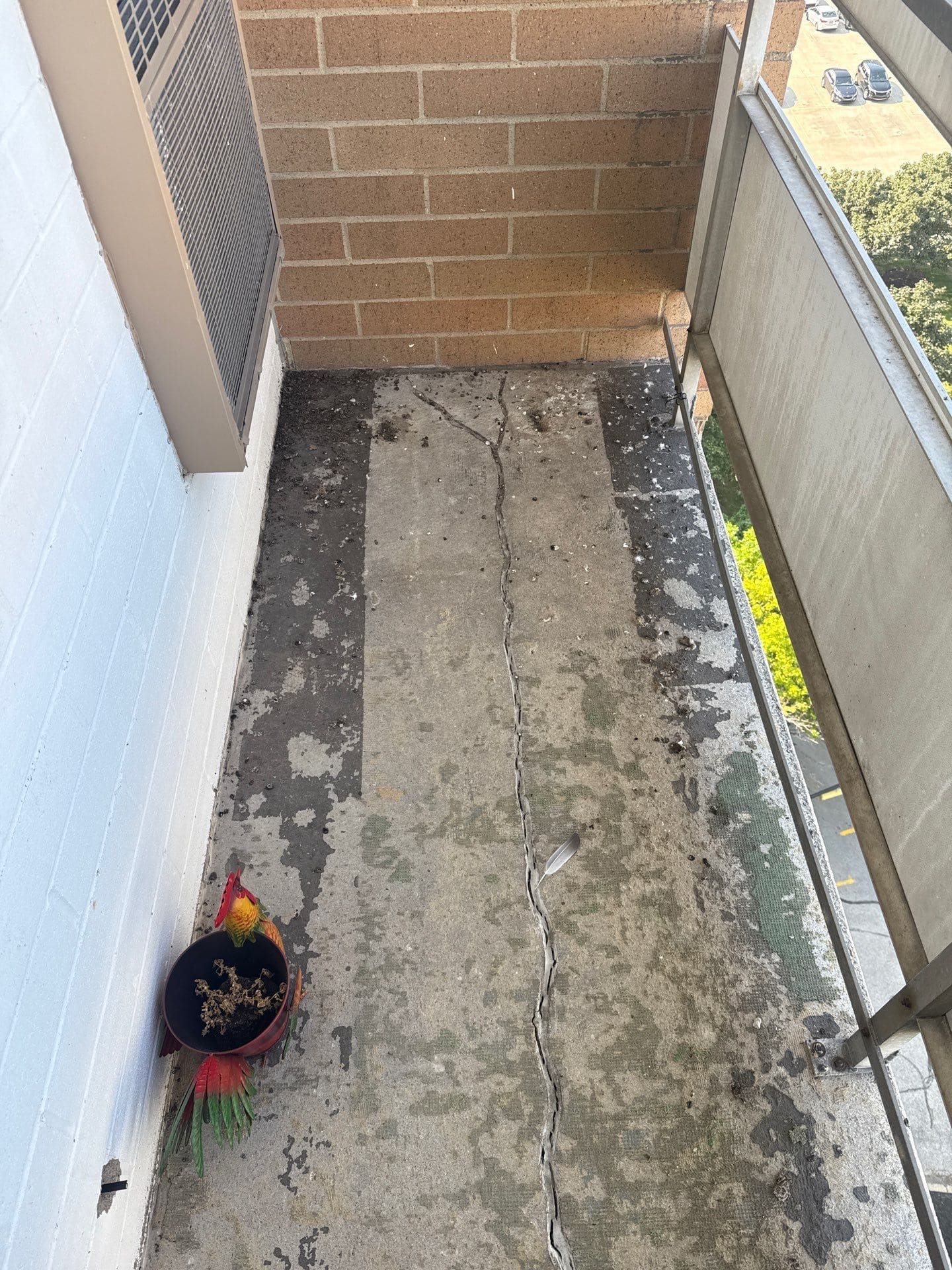
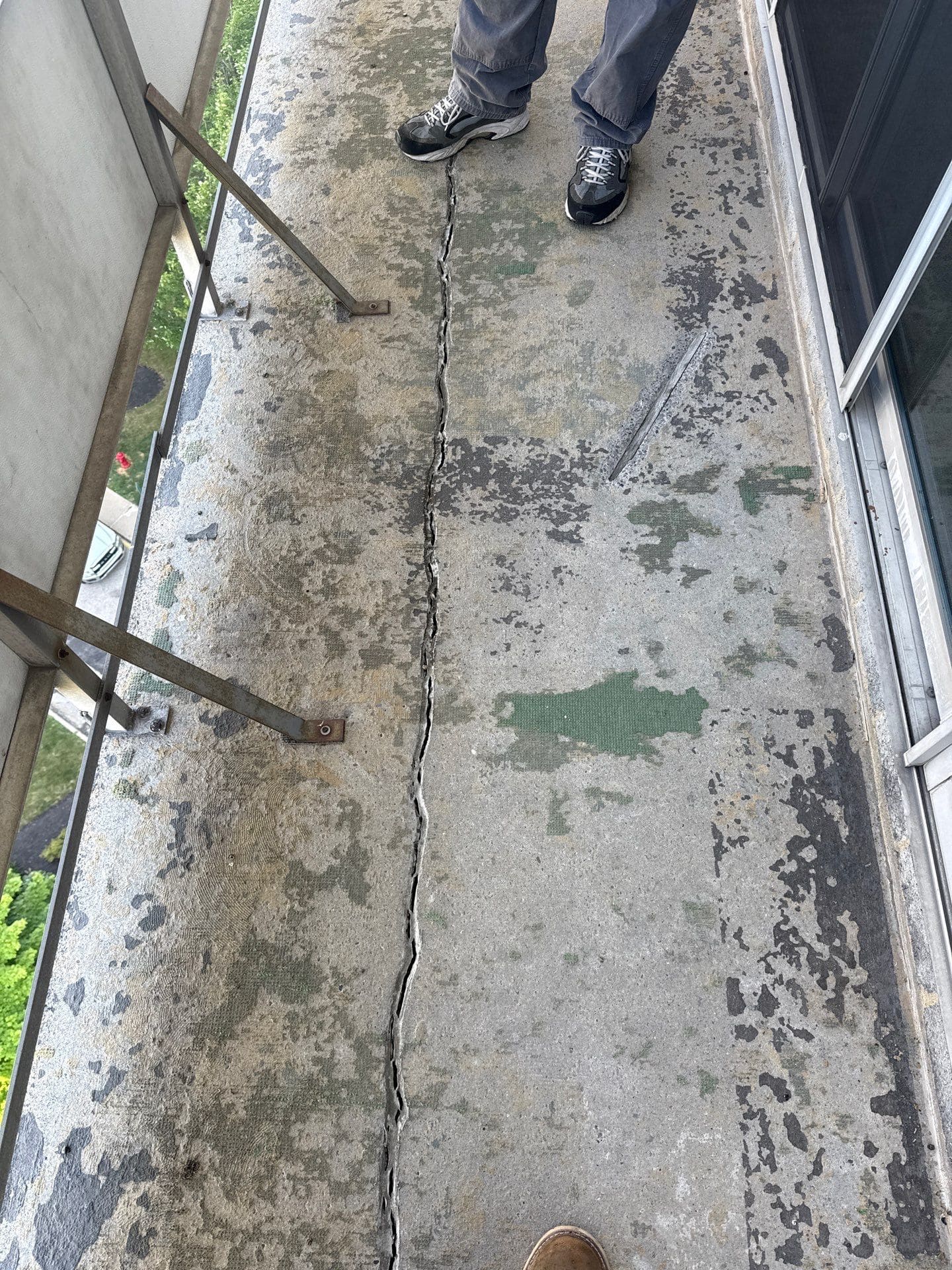
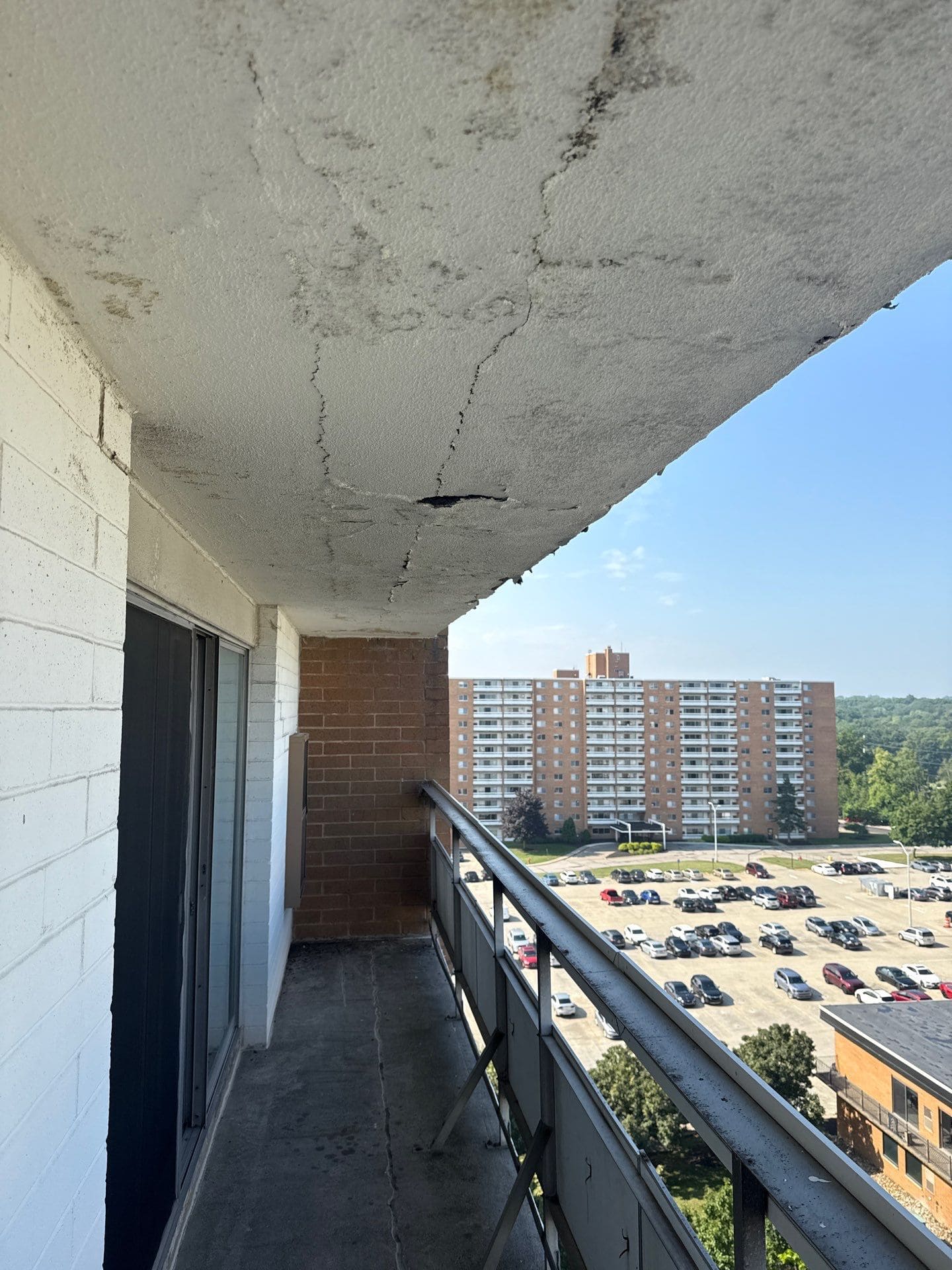
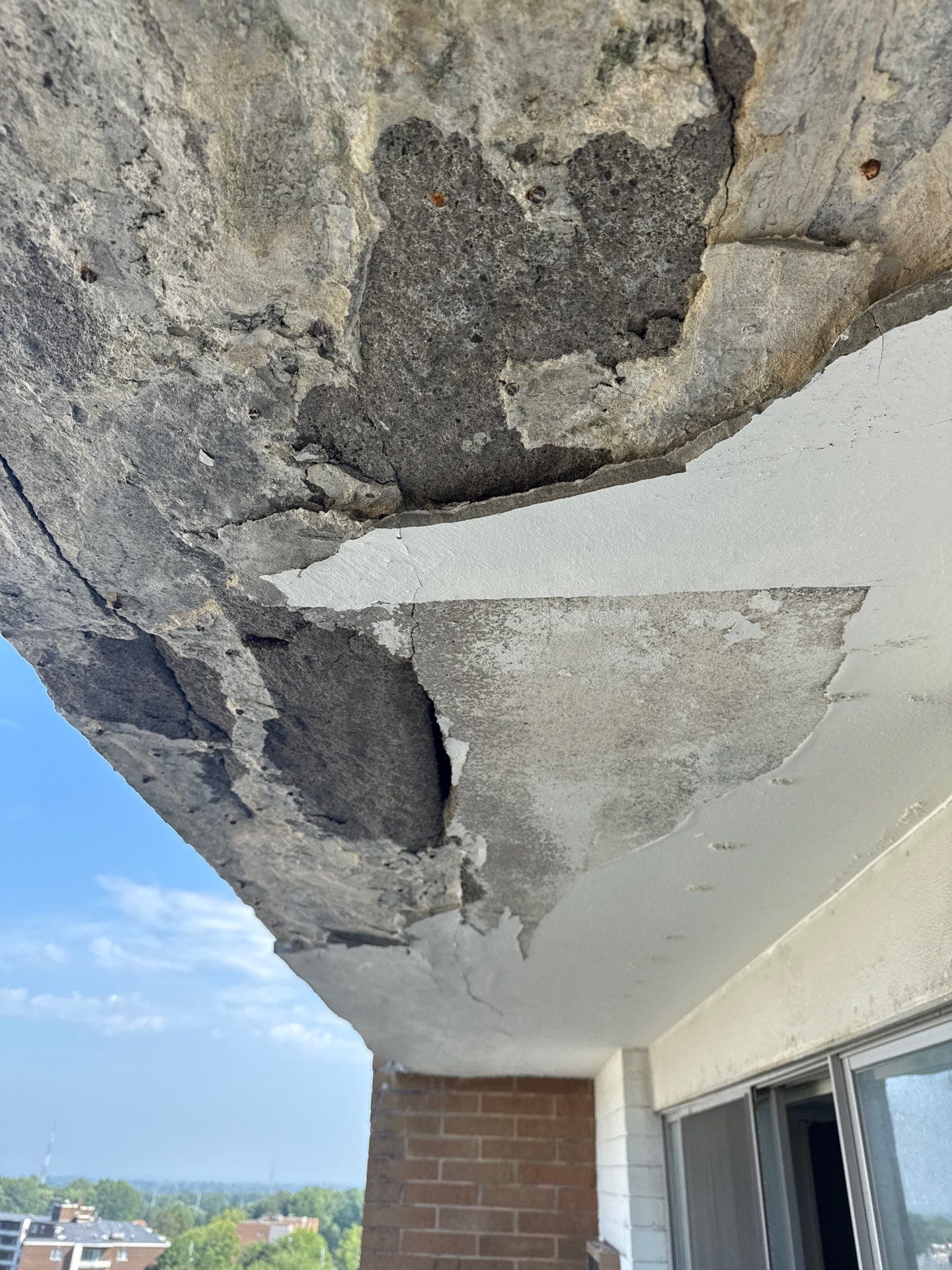
The initial plan was to perform partial-depth concrete repairs in visibly distressed areas. However, once demolition began, the extent of reinforcement corrosion and chloride penetration required full-depth repairs across numerous balconies.
High-performance, specialty repair materials were used to ensure structural integrity and long-term durability. The custom mast climber access system became a defining factor in the project’s success, enabling safe, efficient, and scalable work across multiple elevations.
Daily coordination among ownership, engineers, and field crews ensured that repairs evolved based on real-time findings and an adaptive approach, essential in the field.
Repairs were performed over approximately three months, from July through September. In total, 24 balconies were restored, addressing both structural and waterproofing issues.
Throughout the process, residents remained in their units. Balcony access was temporarily restricted, but disruptions were minimized to noise and workspace isolation.
The completed restoration eliminated life-safety hazards, stabilized deteriorating slabs, and extended the building’s service life. All balconies were returned to full use, with reinforced concrete elements, renewed waterproofing, and improved long-term durability.
The project not only restored the building’s physical condition but also demonstrated how thoughtful engineering and coordination can deliver major structural repairs with minimal disruption to occupants.
The Pine Ridge G Building project reinforced several critical insights:
Even when as-built documentation exists, actual field conditions can differ dramatically.
Early, proactive investigation can prevent cost escalation and reveal hidden failures.
Complex, occupied-site repairs require flexible solutions, both in access and repair strategy.
These takeaways have since informed the team’s approach to similar high-rise balcony rehabilitation projects, improving efficiency and risk management.