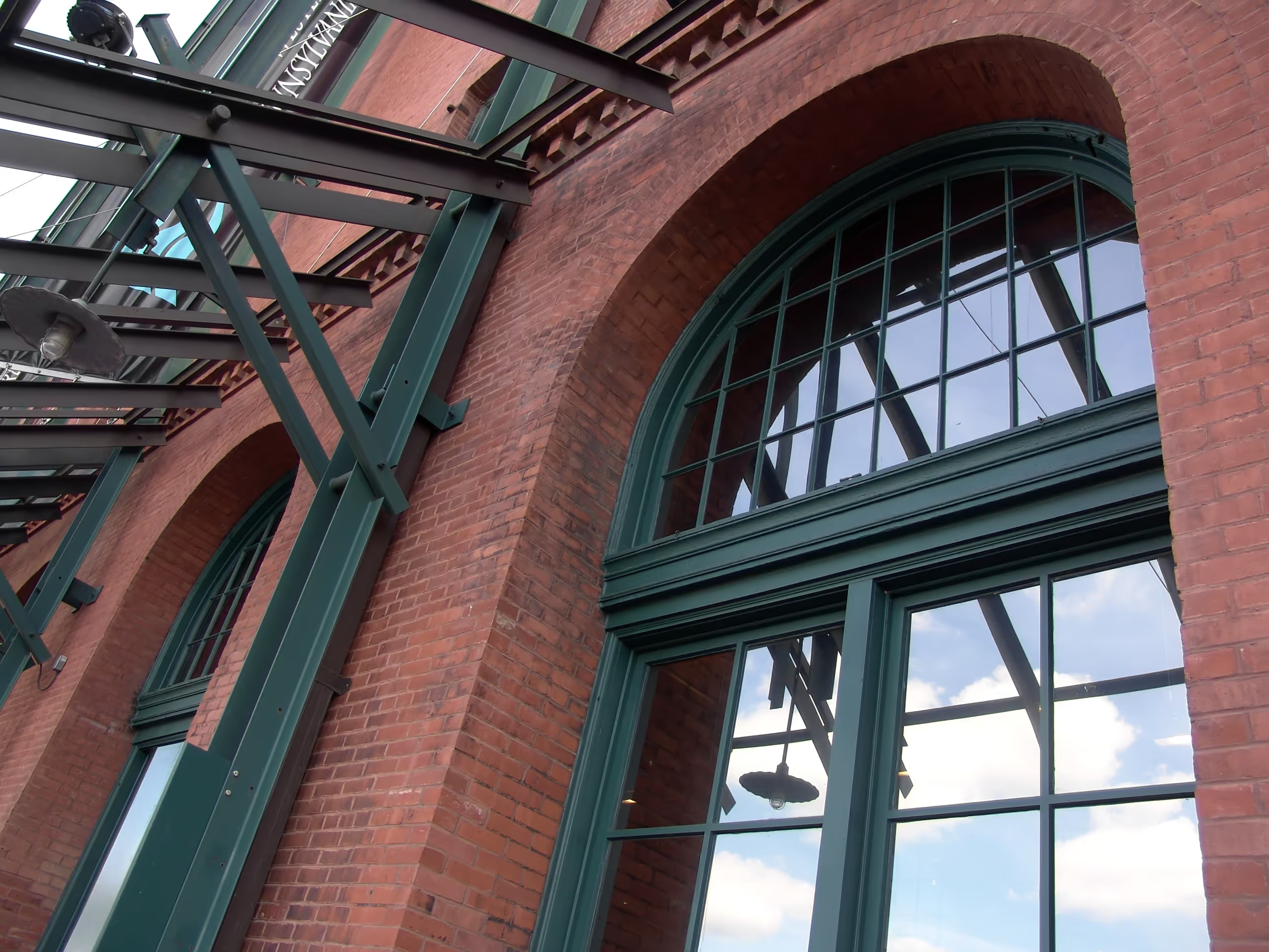
This project involved the restoration of an eight-story historic commercial building located in downtown Northeast Ohio. Constructed in the early 1920s, the structure featured brick masonry facades with stone accents and steel lintels at punched window openings.
Ownership initiated the project after pieces of brick were found on the sidewalk below and tenants reported recurring leaks around window perimeters during heavy rain events.
The objective was to stabilize the facade, address embedded steel corrosion, eliminate water intrusion, and preserve the building’s historic character — all while maintaining full occupancy and street-level pedestrian access.
A hands-on facade assessment was performed using swing stage access. The investigation included close-up visual inspection, mortar joint probing, selective brick removal at distressed areas, and steel lintel exposure at representative openings.
Findings revealed:
In several areas, corrosion of embedded steel had expanded enough to create horizontal cracking patterns above window openings — a classic sign of lintel distress.
The condition assessment confirmed that deterioration was progressive and posed both safety and moisture-related risks if left unaddressed.
Urban Site Constraints
The building sits directly on a busy sidewalk with no setback. Pedestrian protection, sidewalk bridging, and coordinated staging were required to maintain safe public access.
Historic Materials
Replacement brick and mortar had to match existing color, size, texture, and compressive properties to maintain historic integrity and avoid long-term compatibility issues.
Occupied Building
Tenants remained in place during construction. Work sequencing had to limit noise, dust migration, and window access interruptions.
Hidden Deterioration
As masonry was selectively removed, additional steel corrosion and deteriorated backup materials were discovered beyond the originally identified areas.
The restoration program combined stabilization, selective reconstruction, and envelope improvements.
Masonry Restoration
Deteriorated mortar joints were removed and repointed using a compatible mortar designed to match the original composition and strength. Cracked and spalled brick units were selectively replaced to maintain visual continuity.
Steel Lintel Rehabilitation
Where corrosion had caused section loss, steel lintels were cleaned, reinforced, or replaced as required. New steel components were primed and protected prior to masonry reinstallation.
Selective Reconstruction
In areas of advanced displacement, brick was carefully dismantled and rebuilt to restore structural stability and alignment.
Sealant and Joint Replacement
All failed perimeter sealants were removed and replaced with high-performance systems compatible with masonry substrates and designed to accommodate thermal movement.
Water Management Improvements
Flashing and weep details were added or restored where feasible to improve drainage and reduce future moisture accumulation within the wall assembly.
The project was executed over four months during spring and summer conditions.
Swing stages were used to provide safe and controlled access to upper elevations. Sidewalk protection systems remained in place throughout construction to safeguard pedestrians.
Work was sequenced vertically to complete one facade section at a time, minimizing prolonged disruption at any individual tenant space. Window closures and temporary protections were coordinated directly with occupants.
Daily field documentation and engineer coordination allowed repair limits to expand where hidden deterioration was uncovered, without compromising schedule control.
The completed restoration:
The building remains fully occupied, with improved envelope performance and an extended projected service life of 20+ years with routine maintenance.
Corroded steel drives facade distress
Masonry cracking above openings is often a symptom of expanding embedded steel.
Compatibility matters
Using mortar and sealants that match the original materials prevents unintended long-term damage.
Access planning is critical in urban environments
Proper aerial operations and pedestrian protection are as important as the repair work itself.
Early intervention reduces reconstruction scope
Addressing mortar and sealant failure early can prevent widespread steel corrosion and masonry displacement.